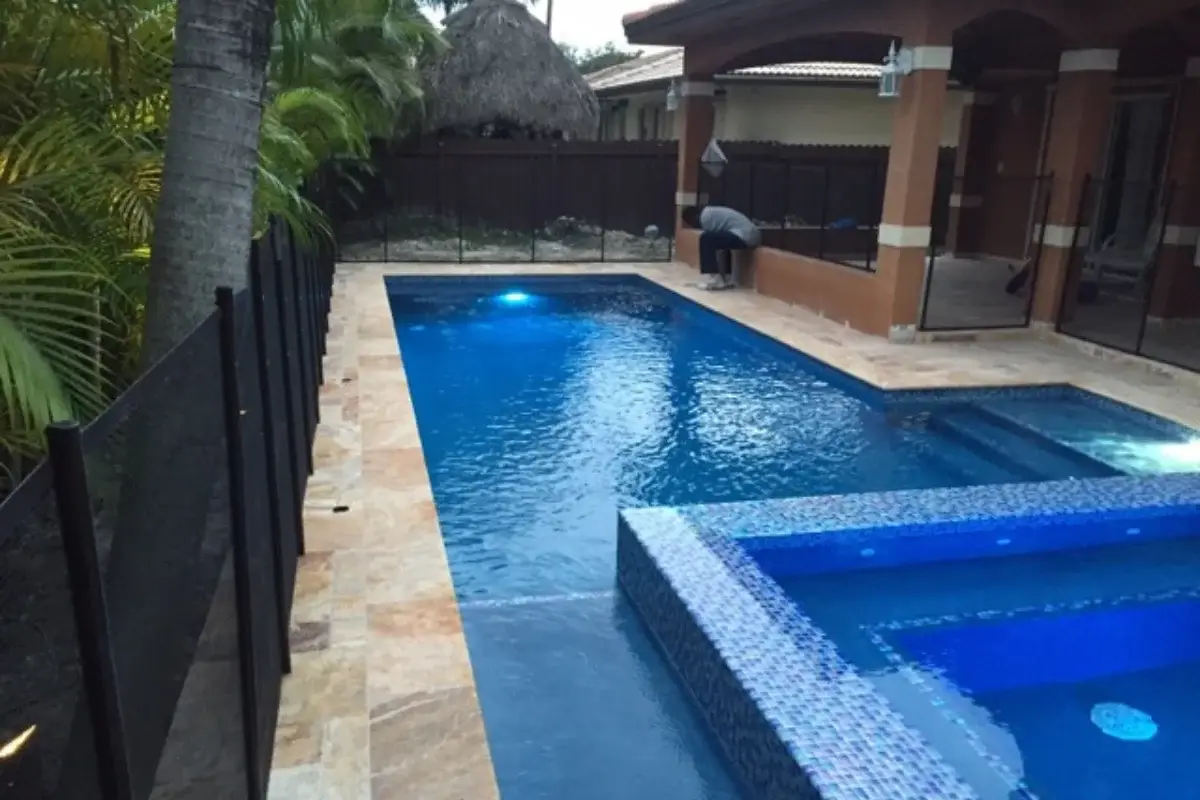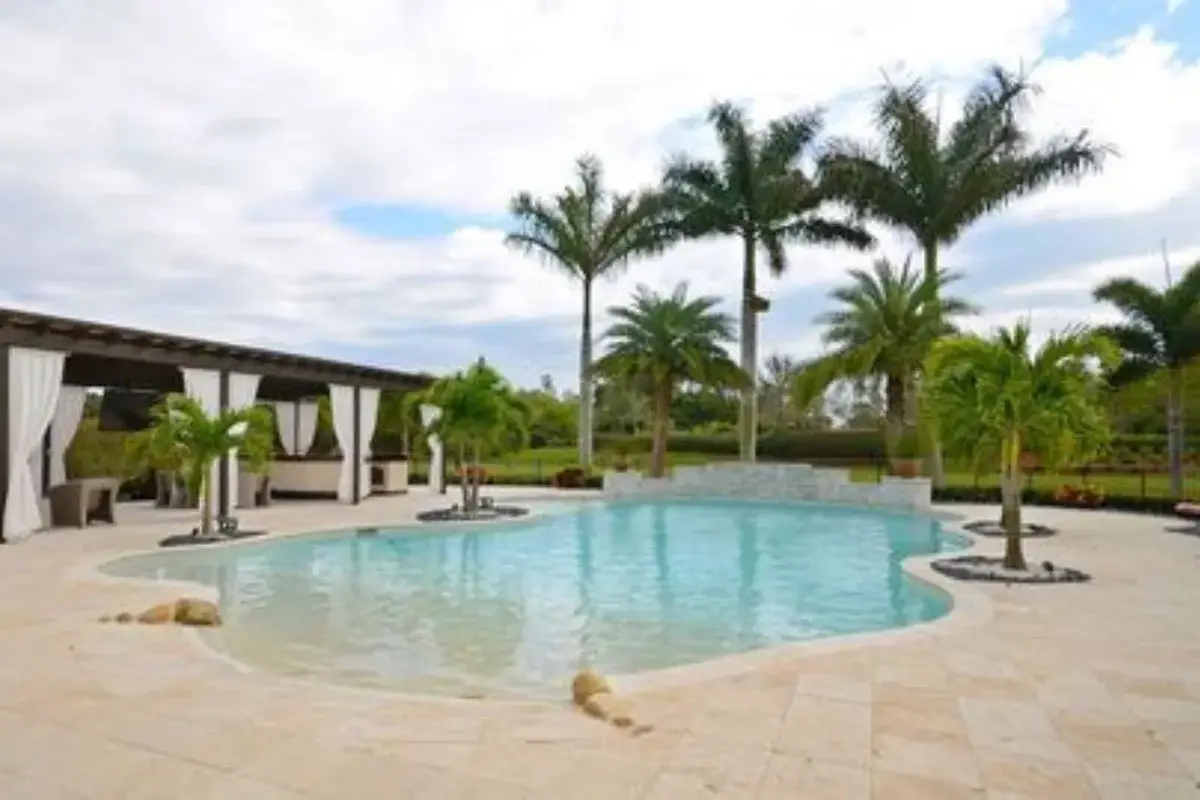
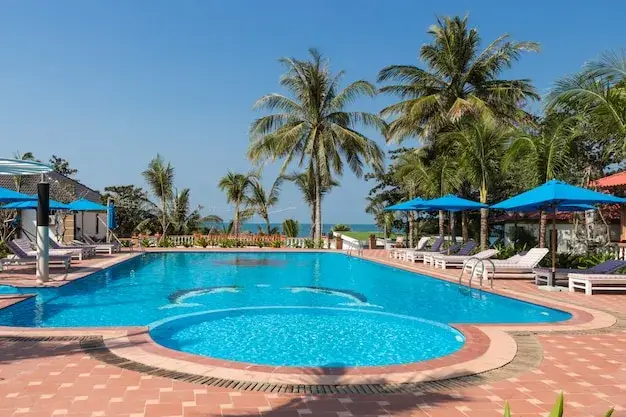
The surface around a pool is the largest thing you will look at, the only part of the project you stand on barefoot, and the element most often chosen last from a small sample. It also has requirements that a patio does not, which is why the material that suits your front walkway may be the wrong answer six feet from water.
After more than 20 years of building pool decking around Georgia and Gwinnett County, our family owned team judges these materials on four things before anything else: how hot they get, how they grip when wet, how they handle pool chemistry, and how they behave through a Georgia freeze. Appearance matters, and it comes after those.
Four Criteria That Reorder Everything
- Surface temperature. A dark deck in a July afternoon is genuinely unusable barefoot, and this is the most frequent complaint we hear about pool surrounds we did not install. Light color helps, and material matters as much as color.
- Wet slip resistance. People get out of a pool and walk on this surface with wet feet, often children moving quickly. Grip when wet, not when dry, is the specification that matters.
- Chemistry and salt tolerance. Splash-out carries chlorinated or salt water onto the deck constantly. If you have or are considering a saltwater conversion, salt tolerance moves up the list, because salt is harder on some materials and on nearby metal than chlorine is.
- Freeze behavior when saturated. A pool deck is wet far more often than a patio. Porous materials that hold water spall when we get our handful of hard freezes each winter, so sealing and material density matter more here.
The Common Materials, Compared
| Material | Heat underfoot | Grip when wet | Maintenance | Cost tier | Best for |
|---|---|---|---|---|---|
| Travertine | Stays notably cool, the best of the common options | Good grip when wet, naturally textured | Seal periodically. Tolerates pool chemistry well | Mid to high | Our usual recommendation where bare feet matter most |
| Concrete pavers | Moderate, cooler in light colors | Good, texture varies by product | Very low. Individual pavers can be lifted and reset | Mid | The best all-round balance of cost, repairability, and performance |
| Porcelain pavers | Moderate | Good when a textured outdoor finish is specified | Very low, non-porous and rinses clean | High | Contemporary designs and heavy stain exposure |
| Poured or stamped concrete | Warm, and hot in darker colors | Depends entirely on the finish applied | Reseal every two to three years, and cracks are hard to repair invisibly | Low to mid | Budget-led projects where a continuous surface is wanted |
| Natural stone (bluestone, flagstone) | Varies, darker stones get hot | Generally good | Seal periodically | High | Where a specific stone character is the design driver |
Travertine
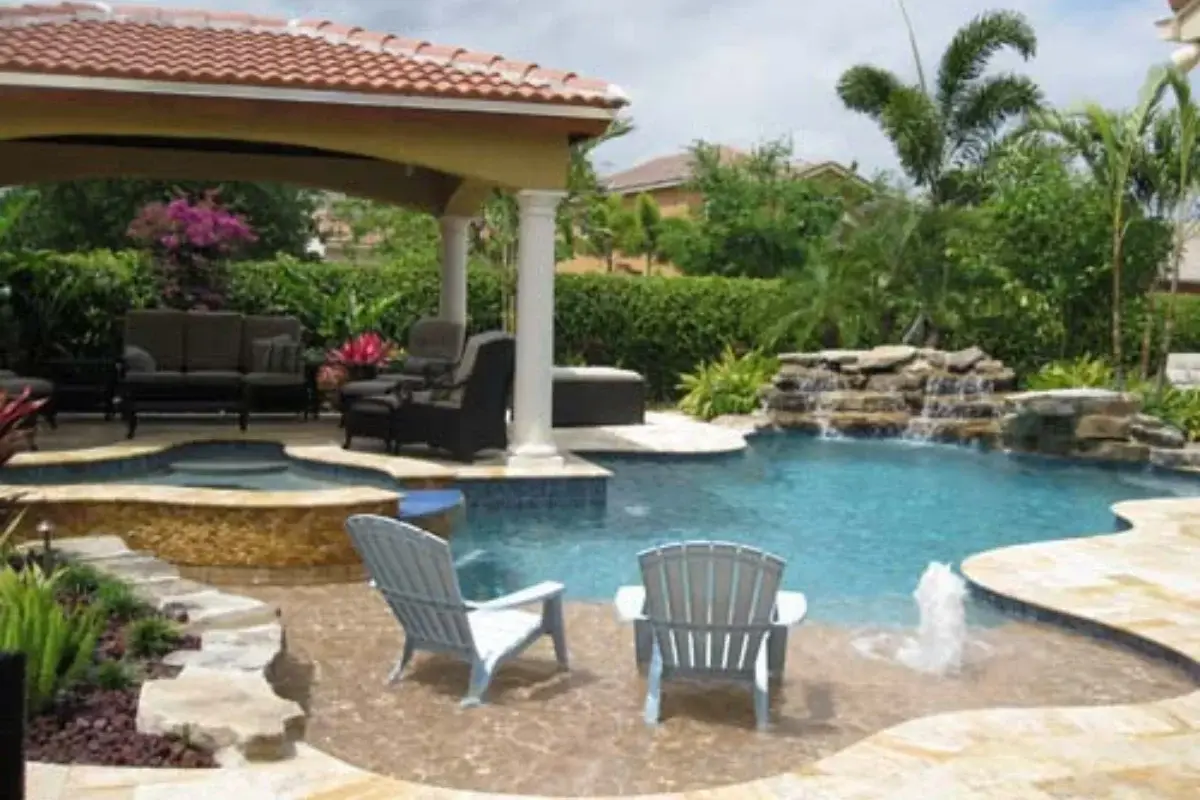
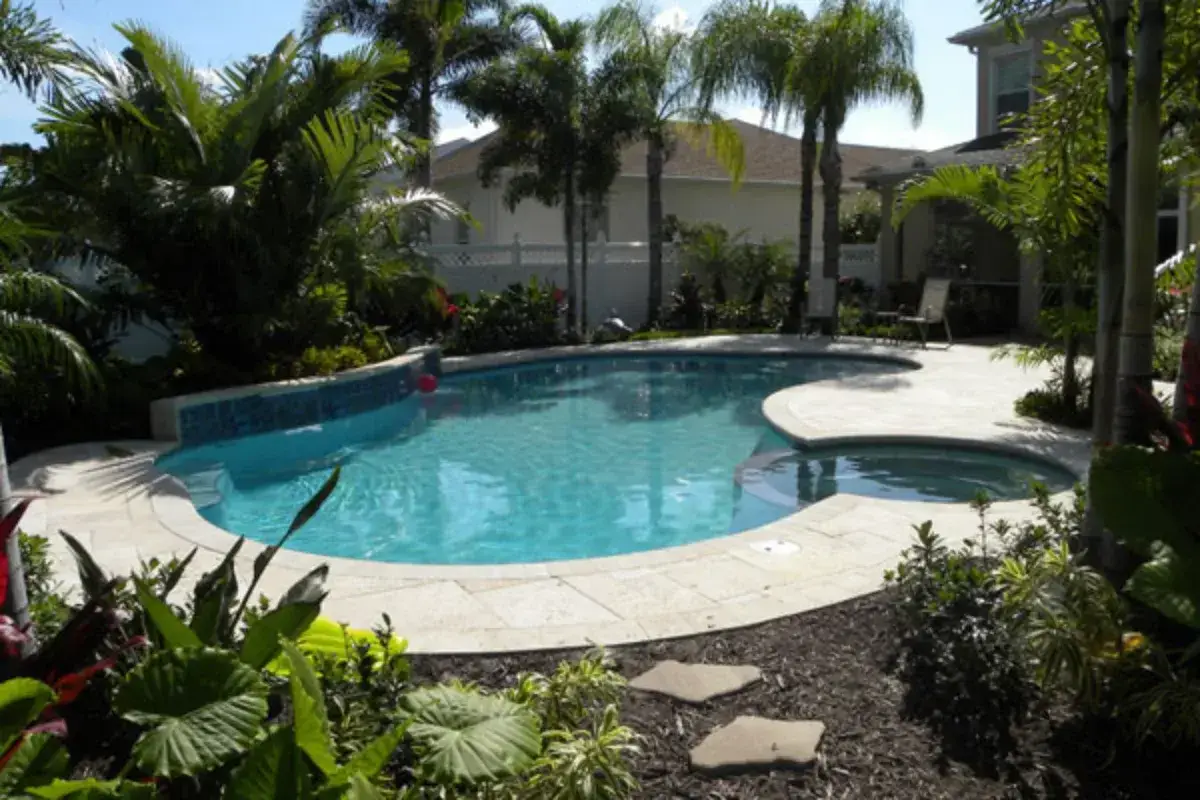
If bare feet are the priority, travertine is the answer we give most often. It is a natural stone that stays measurably cooler than most alternatives in direct sun, its surface is naturally textured so it grips well when wet, and it handles pool chemistry without difficulty. It suits both contemporary and naturalistic designs, and it pairs particularly well with tan and sand-toned interior finishes.
The trade-offs are honest ones: it costs more than concrete pavers, it is a porous stone that needs sealing on a schedule, and lower grades vary in quality. Specify the grade rather than just the material.
Concrete Pavers
The best all-round balance, and what we install most by volume. Modern pavers come in finishes that mimic stone convincingly, they perform well when specified in light colors, and their real advantage is repairability: if one settles or stains, it lifts out and goes back without a visible patch. That matters more around a pool than anywhere else, because pool decks take localized wear. They also integrate naturally with paver patios and surrounding hardscaping.
Porcelain Pavers
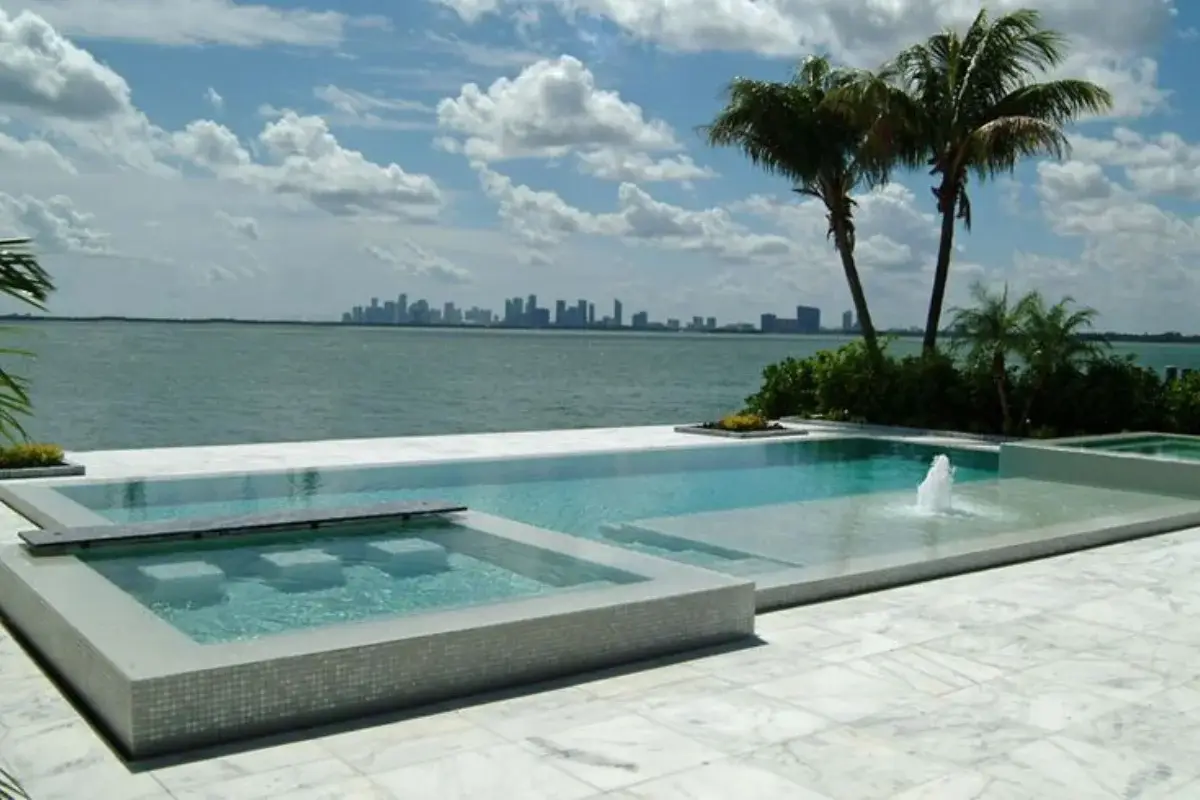
Non-porous, so they resist staining and rinse clean, and they hold color well under UV. They sit at the higher end on cost and must be specified in an outdoor textured finish rather than a smooth interior tile, which is a genuine safety point rather than a preference. Well suited to contemporary schemes and to households worried about staining.
Poured and Stamped Concrete
The lowest-cost route to a continuous surface, and it can be textured and colored convincingly. Two cautions specific to pool surrounds: darker colors get hot, and cracks in a continuous slab are difficult to repair invisibly, whereas a paver field is repaired one unit at a time. Where an existing concrete surround is sound but tired, pool deck resurfacing is usually far better value than replacement.
|
Coping: The Edge You Touch Most
Coping caps the pool edge, and it does more work than its size suggests. It is what swimmers grab, rest their arms on, and climb out over, so its edge profile and surface temperature matter more per square foot than anything else in the project. It is also, as we cover elsewhere, the single element that most dates a pool.
- Bullnose. A rounded edge, comfortable to hold and to lean on. The most common choice and the friendliest for children.
- Square or straight edge. Contemporary and crisp. Pairs with geometric pools and modern architecture, though it is a harder edge to rest on.
- Cantilevered concrete. The deck surface is formed over the pool edge. Economical and once ubiquitous, which is precisely why it reads as dated on older pools.
Material choice follows the deck. Travertine coping with a travertine deck, paver coping with pavers, or a deliberate contrast if the design calls for it. What rarely works is a near-match, which reads as an error rather than a decision. Our pool tile and coping work always specifies coping, tile, and interior finish as a set, and how finish color decides your water color explains why those three have to be chosen together.
Where Premium Genuinely Pays, and Where It Does Not
A page about premium materials that only recommends spending more is an advertisement. Here is where we would and would not.
- Worth paying for: travertine or quality pavers where bare feet go. Comfort underfoot is used every single day the pool is used. This is the upgrade clients thank us for.
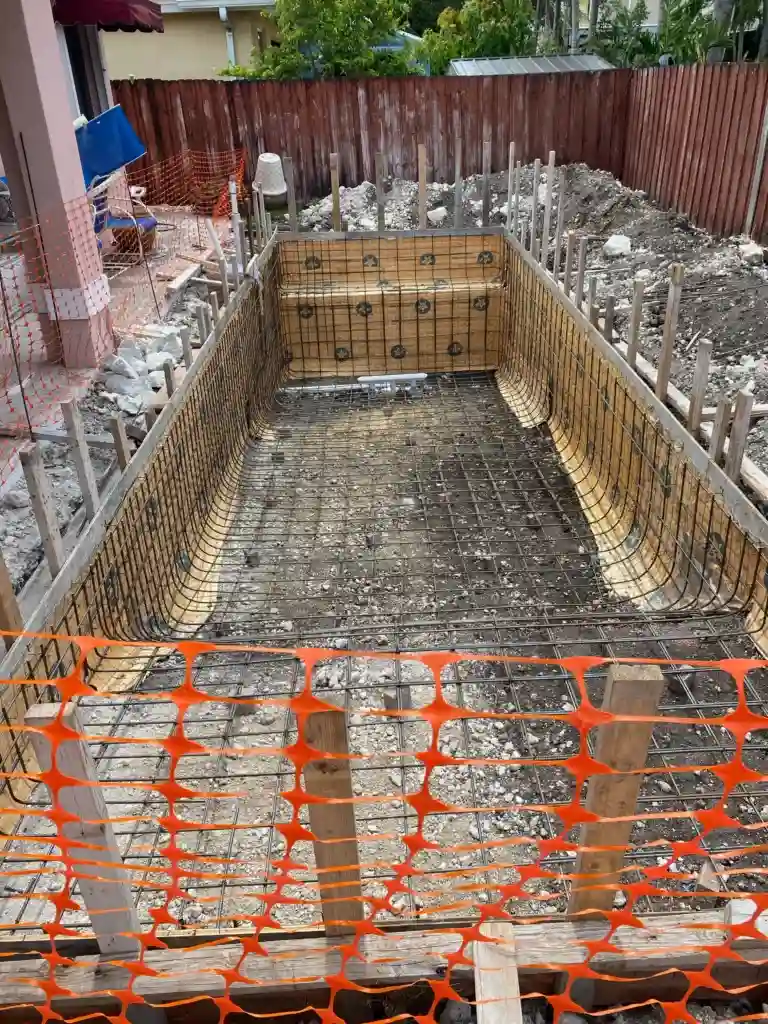
- Worth paying for: the base beneath the surface. Invisible, and the difference between a deck that stays level and one that settles. Never economize here.
- Worth paying for: coping. Small area, disproportionate effect on both comfort and how current the pool looks.
- Rarely worth it: premium material on areas nobody walks. A planted border or a service strip behind the equipment does not need the same specification as the sunbathing area. Spend the difference on the areas in use.
- Rarely worth it: upgrading the deck while leaving the base. The most expensive mistake available. Diagnosing what is beneath comes first, which repairing or replacing a failing deck covers in detail.
Planning It as One Surface
The pool surround rarely stops at the pool. It runs into seating areas, paths, and often an outdoor kitchen or fire feature, and it reads far better when planned as a single surface with deliberate transitions than as separate projects that meet awkwardly. That is a reason to decide the whole footprint at design stage even if it is built in phases, and it is covered in sizing and depth decisions and in the ten stages of a custom build.
For surfaces away from the water, where the four criteria above matter less, decking for patios away from the pool compares the options on different terms. For what goes into the pool structure itself, what goes into the pool itself covers shell, steel, and specification. Integrating fire features and wider outdoor living work around the pool at the same time avoids paying twice for access. See decks we have built, hear from clients who walk on these every day, check areas we serve, and review financing a full surround. Our pool decks and new pool construction pages set out the services.
Frequently Asked Questions
Is travertine good for a pool deck?
It is the material we recommend most where bare feet are the priority. Travertine stays notably cooler than most alternatives in direct sun, its natural texture grips well when wet, and it handles pool chemistry without difficulty. It costs more than concrete pavers and needs periodic sealing, and grades vary, so specify the grade rather than just the stone.
What is the coolest pool deck material?
Travertine performs best among the common options, followed by light-colored concrete or porcelain pavers. Color matters as much as material: any dark surface around a pool gets uncomfortably hot in a Georgia July, which is the most common complaint we hear about surrounds built by others.
What are the options for pool coping?
Bullnose coping has a rounded edge and is the most comfortable to hold and climb out over, which makes it the usual choice for families. Square or straight-edge coping suits contemporary and geometric designs. Cantilevered concrete, where the deck is formed over the pool edge, is economical but reads as dated. Material should either match the deck or contrast deliberately, never nearly match.
Does a saltwater pool need different deck materials?
Salt tolerance becomes a higher priority. Salt is harder than chlorine on some porous materials and on nearby metal fixings, so sealing schedules matter more and fixings should be specified accordingly. Travertine, quality pavers, and porcelain all perform well; the specification detail is more about sealing and fixings than about ruling materials out.
Come and Stand on the Samples
You dream it, we build it. Aqualis Pools is a family owned, licensed and insured builder with more than 20 years of experience, backed by warranties of 15 years structural, 15 years plaster, and 3 years equipment, serving Georgia and the surrounding Georgia communities. Choosing a deck surface from a dry sample indoors tells you very little. Call +1 (770) 373-8405 or ask which surface suits your pool, and we will bring the options to your yard and wet them so you can judge properly.