
Three upgrades change a backyard more than anything else you can spend money on: what you walk on, how it is lit, and where people sit. They are also the three most commonly done badly, usually because each gets chosen separately and none of them relate to the others when it is finished.
This guide covers how our family owned team approaches the first two in detail, drawing on more than 20 years of outdoor living projects across Georgia and Gwinnett County. Seating gets a shorter treatment here because we cover seating dimensions and dining clearances properly in a separate guide.
Lighting: Technique Matters More Than Fixtures
Almost every disappointing backyard lighting scheme has the same cause: too much light, all at one height, all pointing the same way. Good outdoor lighting is about direction and restraint. These are the techniques we use, and the reasons for each.
Uplighting
A fixture at ground level aimed up into a tree canopy, a stone wall, or an architectural feature. This is what gives a yard depth after dark, because it puts light on vertical surfaces at the edges rather than pooling it in the middle. Two or three well-placed uplights in mature trees do more for a Georgia backyard than a dozen path lights.
Downlighting and Moonlighting
Fixtures mounted high, often in a tree or under an eave, casting light downward. Set in a canopy it mimics moonlight through leaves, which is the most natural-looking effect available outdoors and the one clients react to most strongly when we demonstrate it.
Grazing and Wall Washing
Light aimed close and parallel to a textured surface to bring out its relief, which is why it suits stone. It makes retaining walls and stacked stone features read as intentional design at night rather than disappearing.
Step, Path, and Task Lighting
The functional layer. Every step gets light, either recessed into the riser or from a nearby fixture, because unlit level changes are the most common cause of backyard falls. walkways and pathways need enough light to read the route, not enough to light the lawn. Task lighting belongs over work surfaces only.
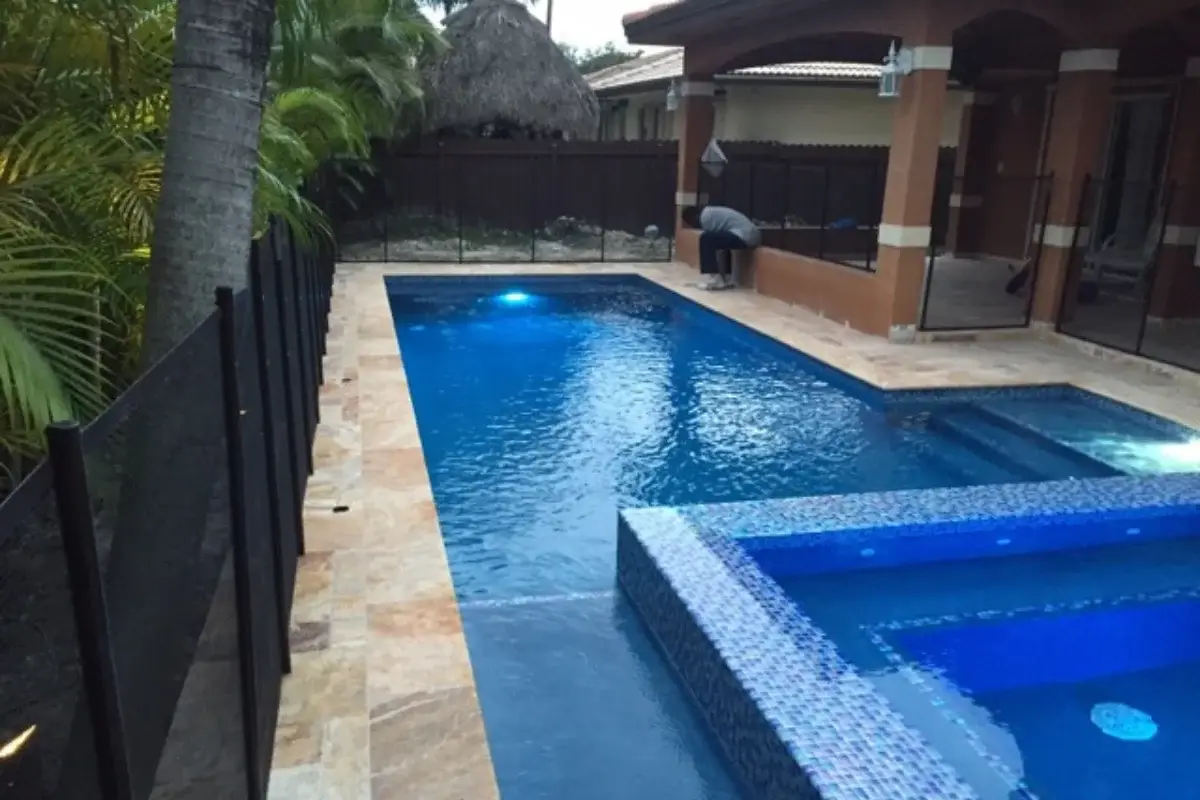
Two specifications worth insisting on. Keep color temperature warm, around 2700K, across every fixture; mixing warm and cool light is what makes a yard look like a parking lot. And prefer low-voltage systems where possible, since they are safer around water and far easier to adjust or extend later. Line-voltage work, and anything near a pool, is licensed electrical work requiring GFCI protection and inspection. If you want the whole system on schedules and scenes, putting lighting on automated control is covered separately. Where there is water, coordinated pool lighting should be designed on the same plan so the whole yard reads as one composition.
|
Decking and Patio Surfaces: A Straight Comparison
The surface is the largest single area in most backyards and the hardest thing to change later, so it deserves more thought than it usually gets. Here is how the common options compare in Georgia conditions.
| Surface | Cost tier | Maintenance | Heat underfoot | Realistic lifespan | Best suited to |
|---|---|---|---|---|---|
| Concrete pavers | Mid | Low: occasional rinse, reset a paver if it settles | Moderate, cooler in light colors | 30+ years | The default we recommend around pools and for most patios |
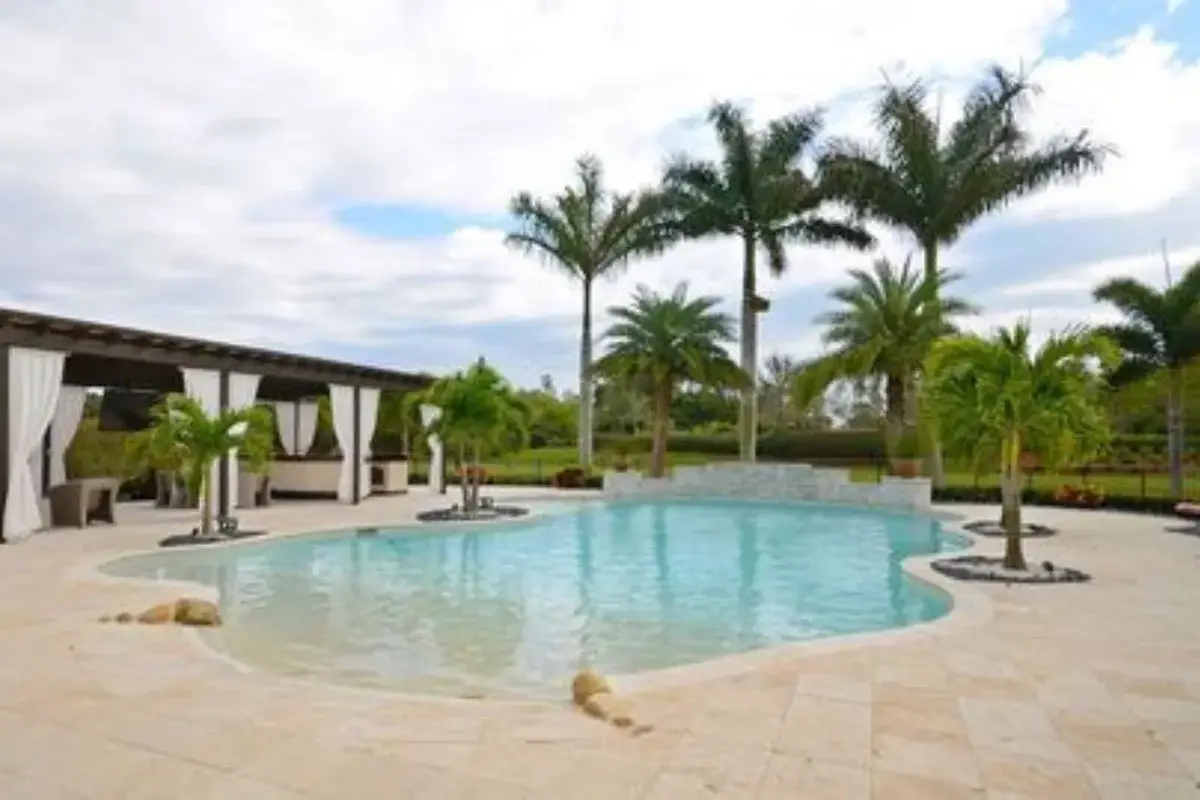
| Travertine | Mid to high | Low to moderate: seal periodically | Stays notably cool underfoot | 30+ years | Premium pool surrounds where bare feet matter |
| Porcelain pavers | High | Very low: non-porous, rinses clean | Moderate | 30+ years | Contemporary designs and heavy stain exposure |
| Stamped concrete | Low to mid | Moderate: reseal every 2 to 3 years, can crack | Warm in dark colors | 15 to 25 years | Budget-conscious patios where a monolithic look is wanted |
| Composite decking | Mid to high | Very low: no staining or sealing | Warm, dark boards get hot in direct sun | 25 to 30 years | Elevated decks and sloped lots |
| Pressure-treated wood | Low | High: clean and reseal every 1 to 2 years | Cool | 10 to 15 years | Lowest upfront cost, highest lifetime effort |
Two things about that table are specific to our climate. Heat underfoot matters more here than in most markets, because a dark surface around a pool in July is genuinely unusable barefoot, and it is the complaint we hear most often about installations we did not build. And maintenance intervals in Georgia run shorter than manufacturer averages because of humidity and pollen loading, so a surface described as needing sealing every three years often means two here.
Deck or Patio: How We Decide
Clients often arrive assuming they want one or the other, when the site usually decides it. A patio at grade is generally less expensive per square foot, lasts longer, needs less maintenance, and integrates naturally with paver patios and surrounding hardscaping work. It is our default recommendation on level lots.
A deck earns its cost when the ground works against you: a sloped lot where a patio would need substantial retaining and fill, a door threshold well above grade, or a need to build out over an obstruction. On those sites custom decks are cheaper and better than moving that much earth. Many of our projects use both, with a deck stepping down to a patio, which also creates the natural zone division a single-level surface never gives you.
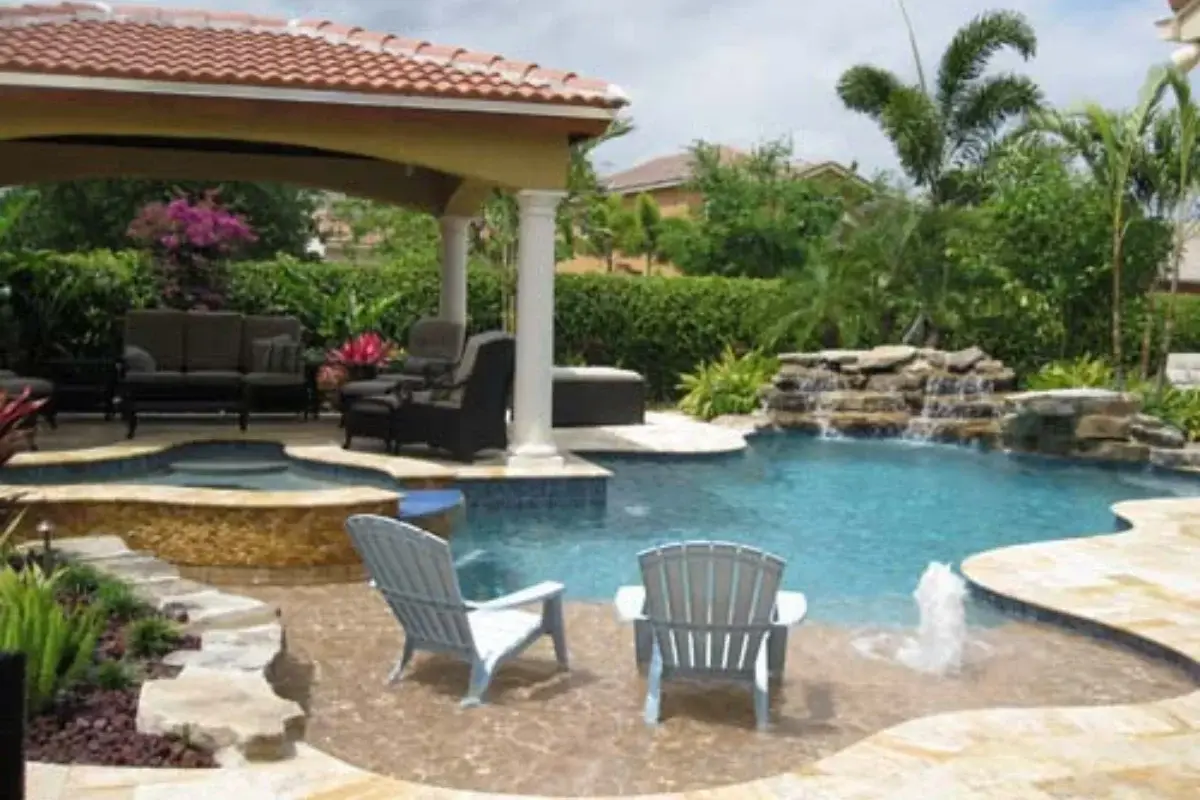
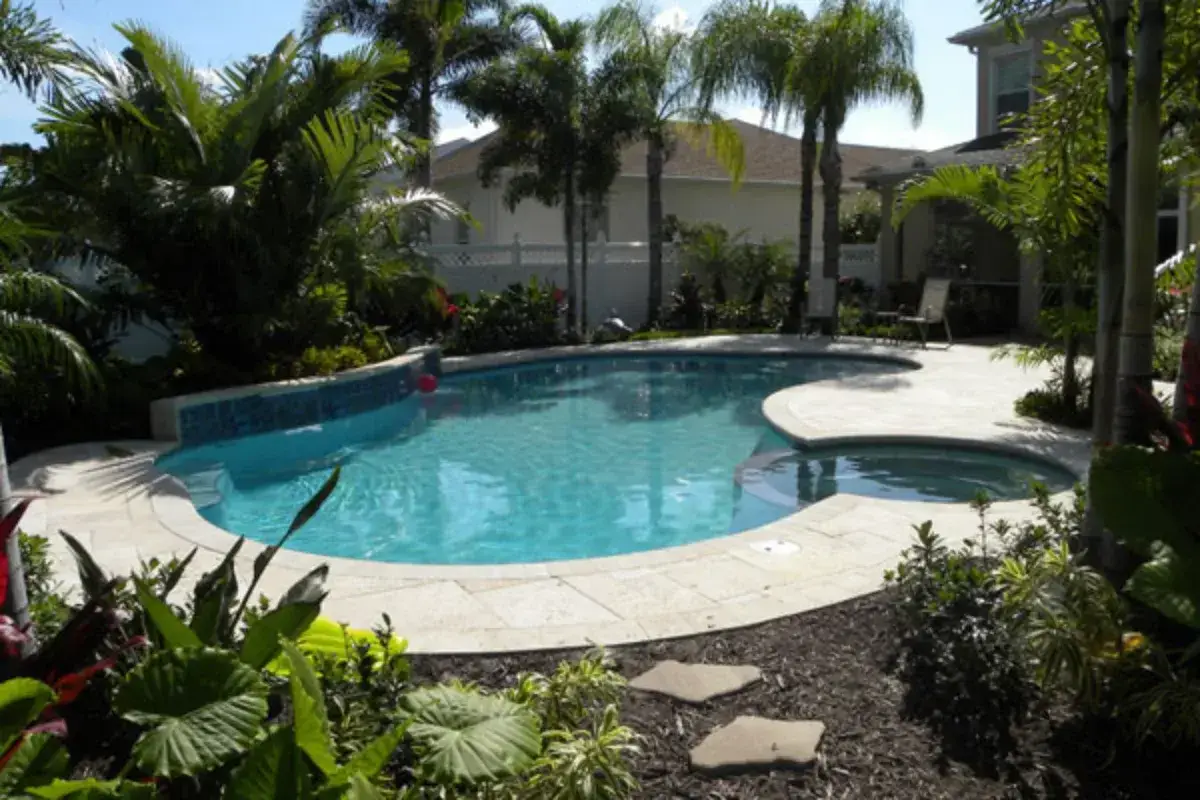
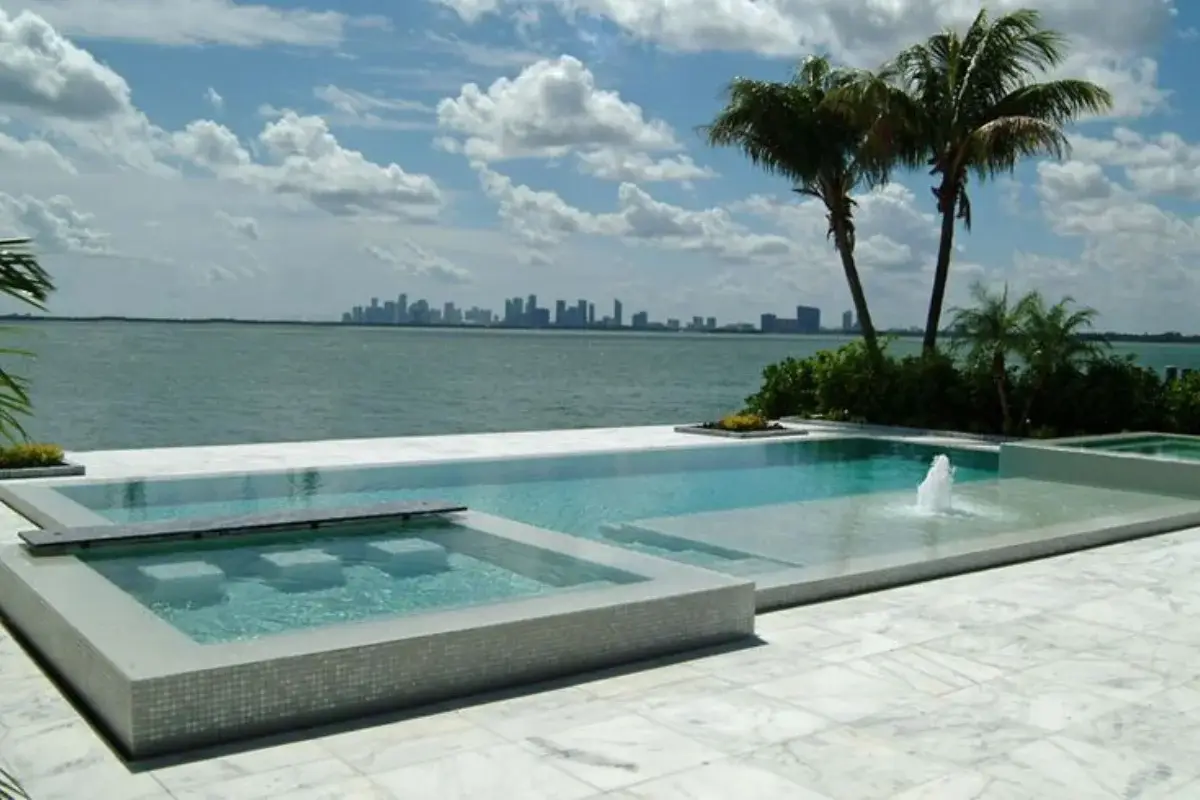
Around water, pool decking has its own requirements for slip resistance, drainage away from the water, and cool surface temperature. If your existing surround is sound underneath but tired on top, pool deck resurfacing is usually a fraction of replacement cost and worth assessing before you budget for a full tear-out.
Seating: Fit It to the Surface You Built
Seating is the easiest of the three to change and the one most worth planning around the other two. The essentials: build permanent capacity into the landscape with seat-height walls so the yard handles a crowd without stored furniture, keep at least one flexible open area, and position a fire pit or similar anchor away from the house so guests spread out rather than cluster at the door. Shade decides how much any of it gets used, so a pergola or a roofed pavilion over the main seating zone is usually money better spent than more furniture. For specific dimensions, clearances, and how to size a dining zone, see our dedicated guide, and for planning around who actually uses the yard, designing a yard for the whole household covers that ground.
You can see decks and patios we have built across the area, read what clients say about the finish, check the areas we serve, and review financing a full surface replacement if the surface is the big-ticket item in your project.
Frequently Asked Questions
What is the best decking material for a Georgia backyard?
Concrete pavers for most at-grade patios and pool surrounds, because they handle humidity, are repairable a paver at a time, and stay cooler in light colors. Travertine is the premium choice where bare feet matter. Composite decking is the right answer for elevated decks on sloped lots. Pressure-treated wood is cheapest upfront and the most work over its life.
How do I light a deck or patio without over-lighting it?
Use layers rather than brightness: uplighting for depth at the edges, downlighting for natural overhead light, dedicated light on every step, and low path lighting to mark routes. Keep every fixture at the same warm color temperature, around 2700K, and put zones on separate dimmable circuits.
Is a deck or a patio better?
On level ground a patio is usually better value: lower cost per square foot, longer life, less maintenance. A deck wins on sloped lots, where the door sits well above grade, or where building over an obstruction avoids major earthworks. Many yards do best with both, stepping from one to the other.
Can I resurface my pool deck instead of replacing it?
Often, yes. If the substrate is structurally sound and the problem is surface wear, staining, or dated finish, resurfacing costs a fraction of replacement. If there is settlement, cracking that traces to movement, or drainage running toward the pool, those need addressing first. We assess the substrate before recommending either.
Let’s Get the Surface and the Lighting Right
You dream it, we build it. Aqualis Pools is a family owned, licensed and insured builder with more than 20 years of experience and a 15 year structural warranty, serving Georgia and the surrounding Georgia communities. Surfaces and lighting are the two things you cannot easily redo, so they are worth planning properly. Call +1 (770) 373-8405 or tell us about your space for a free design and written quote.