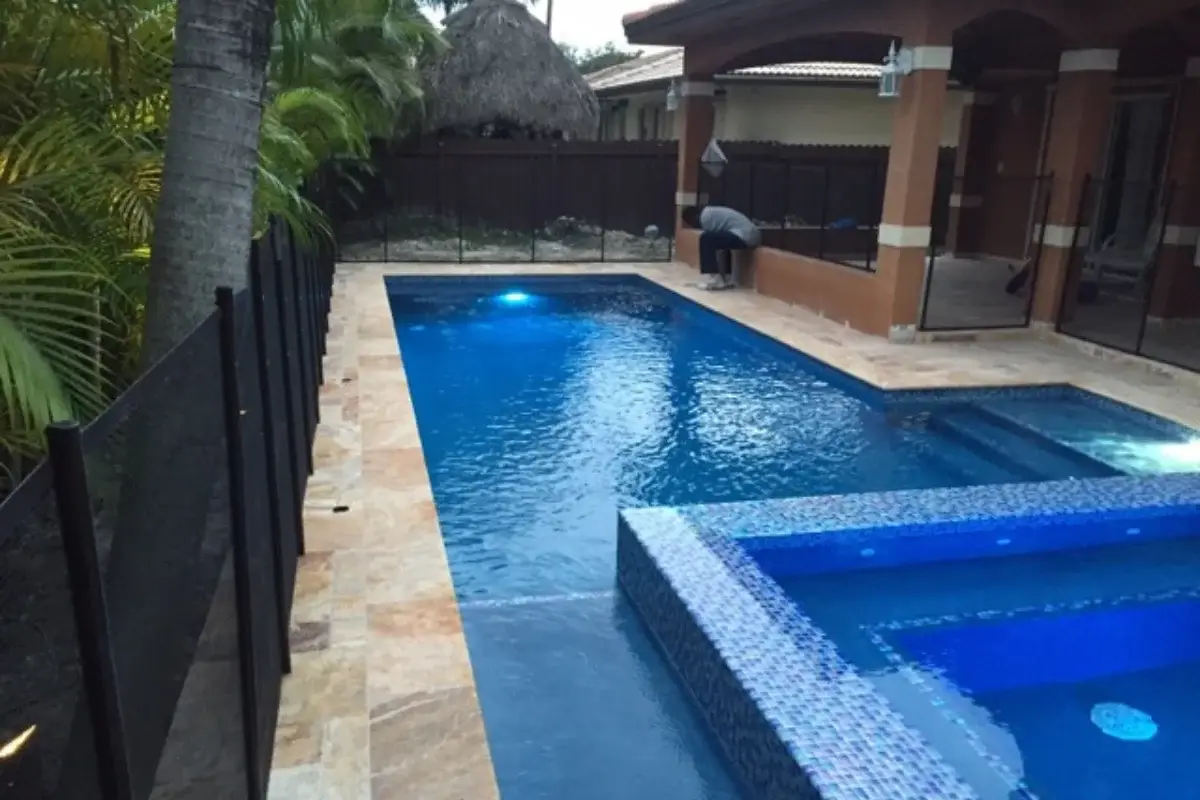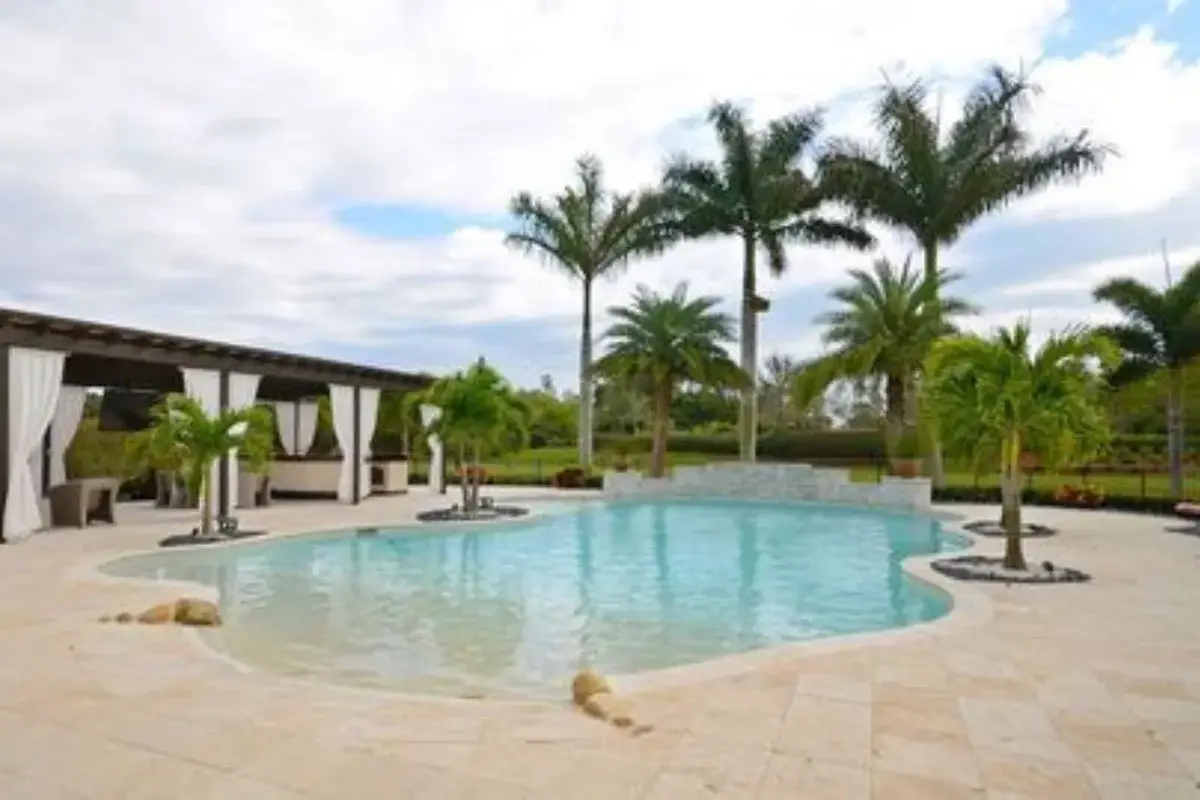

The most common thing clients get wrong in a renovation is not the budget or the timeline. It is the color. They choose an interior finish from a sample the size of a postcard, held in a showroom under artificial light, and then see it in their own backyard at full scale, underwater, in Georgia summer sun, and it is not what they pictured.
This guide is about how a remodeled pool actually looks, which is the part everyone cares most about and almost nobody explains. After more than 20 years of pool remodeling around Georgia and Gwinnett County, our family owned team has learned to talk clients through these decisions before the samples come out. If you want the practical side, what a full renovation covers sets out scope and durability, and whether your pool is due for work is the diagnostic.
Your Water Color Comes From Your Finish Color
Pool water has no color of its own at backyard depths. What you see is the finish, seen through water, which shifts it toward blue and deepens it. So choosing a finish is choosing your water color, and the sample never looks like the result because the sample is dry, small, and not under three to six feet of water.
This is the table we walk clients through. It describes what each finish family typically produces in this climate, though shade, surroundings, and depth all shift it.
| Finish color | Typical water appearance | Worth knowing |
|---|---|---|
| White | Bright, pale aqua, close to a hotel pool | Shows the truest blue in strong sun. Also shows dirt, leaves, and any patching most clearly |
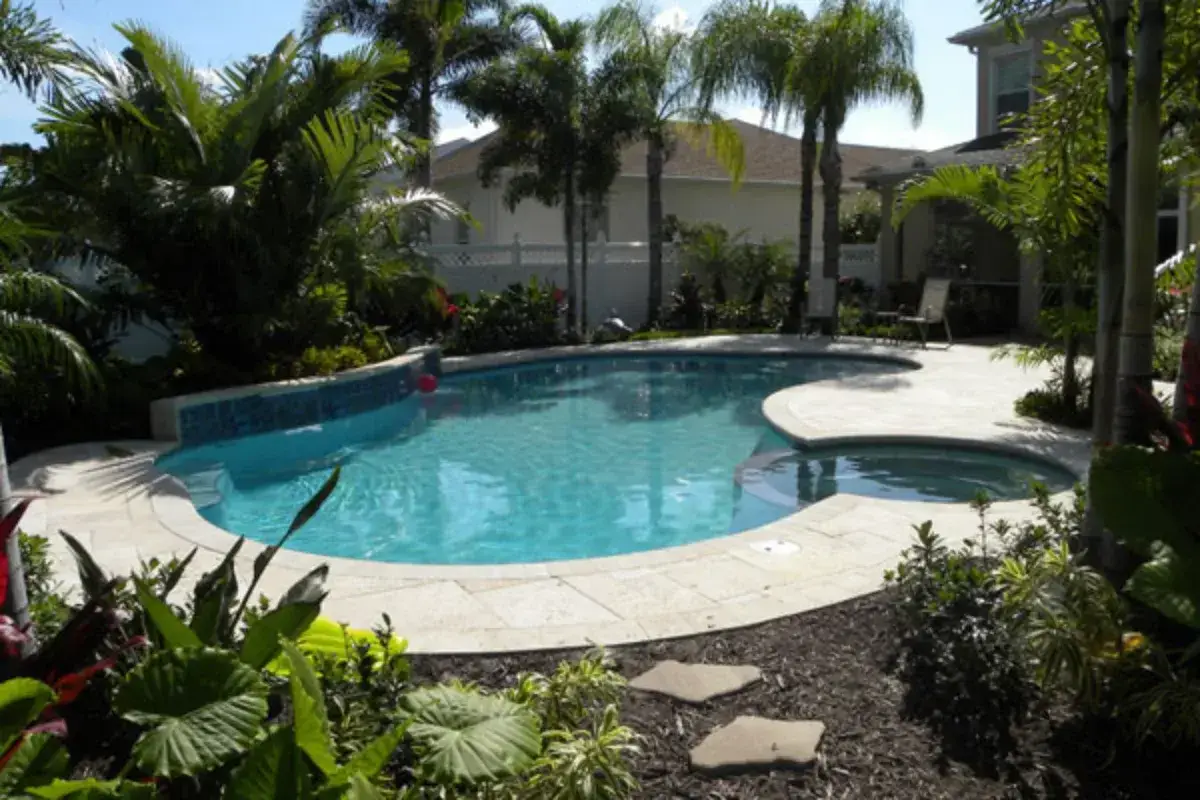
| Light blue or light grey | Classic mid blue, slightly deeper than white | The safest choice for most homes and the most forgiving of debris |
| Medium to dark grey | Deep blue-green, reads as a natural body of water | Currently the most requested. Hides debris well, and dark surfaces absorb more heat from sunlight |
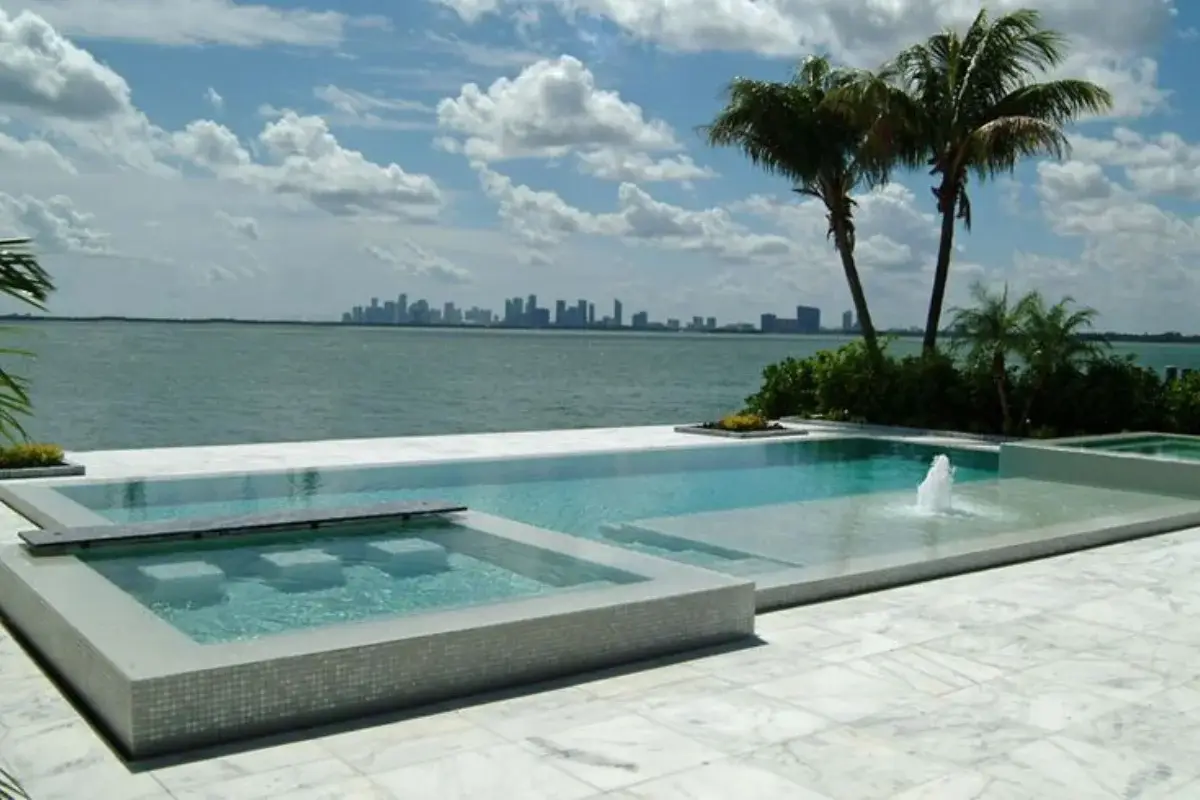
| Dark blue or black | Very deep, near-navy, strongly reflective of sky and surroundings | Dramatic and mirror-like when still. Reflections dominate, so what surrounds the pool matters more |
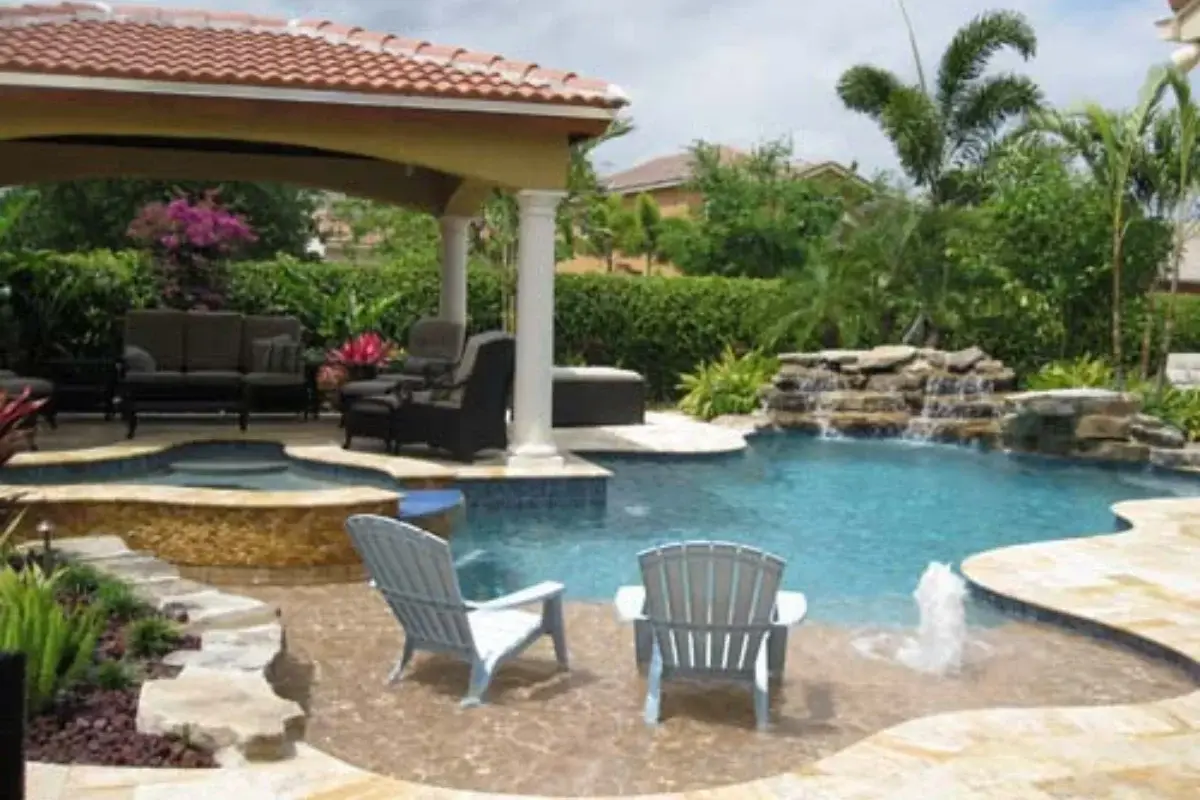
| Tan, beige, or sand | Green-turquoise, lagoon-like | Pairs well with travertine and naturalistic designs. Reads warmer and less blue than clients often expect |
Two practical points. Always look at a sample wet, outdoors, in daylight, ideally at the size of a dinner plate rather than a chip. And look at a finished pool in the same finish if you possibly can, which is the reason we keep before and after remodels documented. Photographs on a phone screen do not settle it either, since white balance changes everything.
Light or Dark: What Changes Besides the Look
Darker finishes are the strongest trend we see, and they do more than change the color. A dark surface absorbs more of the sunlight that reaches it, so dark-bottomed pools tend to run slightly warmer, which is a modest but real benefit in the shoulder seasons. They also hide leaves and debris well, which matters under trees.
The trade-offs are worth knowing before committing. Dark finishes are highly reflective when the water is still, so the pool mirrors the sky and whatever surrounds it, which is lovely when the surroundings are finished and less so when they are not. Scale and mineral deposits show more clearly against dark surfaces, so water chemistry discipline matters more. And a dark pool reads as deeper than it is, which some families like and others find less inviting for small children. We would rather raise all of that than have a client discover it in year two.
| Choosing a finish? We will bring samples to your yard and look at them wet, in daylight, against your house and your decking, rather than under showroom lights. Call Aqualis Pools at +1 (770) 373-8405 or see samples in daylight. The consultation and quote are free. |
Waterline Tile: The Detail That Sets the Style
Waterline tile is a narrow band and it carries a disproportionate share of a pool’s character. It is also the element clients most often default on, choosing whatever is closest to the finish and missing the opportunity.
- Glass tile has depth and catches light in a way ceramic cannot, particularly in iridescent finishes that shift color as the sun moves. It is the premium choice and the one that most reliably makes a pool look expensive.
- Porcelain and ceramic cover an enormous range at lower cost, from plain solids to convincing stone looks, and perform perfectly well.
- Natural stone tile suits naturalistic and travertine-led designs, reading softer than glass.
- Mosaic and patterned bands add detail at close range. Worth considering that you see the waterline from the deck constantly and from across the yard rarely, so intricate patterns reward the people actually using the pool.
One piece of advice we give consistently: pick the tile against the finish sample and the coping sample together, not separately. The three are seen as one composition and choosing them in isolation is how pools end up looking slightly assembled. Our pool tile and coping work always specifies them as a set.
Coping: The Frame Around the Picture
Coping is the capping around the pool edge, and as we noted when discussing what dates a pool, nothing signals an era more clearly. Cantilevered concrete with a rolled edge reads as 1990s almost regardless of condition. Squared, thin-profile stone or precast reads as current.
Material and profile both matter. Travertine stays notably cool underfoot, which is a genuine comfort decision in July, and its warm tone pairs naturally with tan and sand finishes. Bluestone and darker stone suit grey and dark finishes and modern architecture. Precast concrete coping offers the widest range of profiles at moderate cost. Whichever you choose, the coping should relate to the pool decking and to the hardscaping around the pool, either matching or deliberately contrasting rather than nearly matching, which is the one outcome to avoid.
Freeform or Geometric: Matching the Pool to the House
Pool shape is largely fixed unless you are undertaking structural changes like ledges and spas, but finish, tile, and coping choices can push an existing shape convincingly in either direction.
A freeform pools we have built design, with curved outlines and naturalistic edges, suits traditional and craftsman homes, wooded lots, and travertine or sand-toned schemes. geometric pools, with straight lines and defined corners, suit contemporary and transitional architecture and pair naturally with grey finishes, squared coping, and linear water features. Most of the pools we remodel around here were built freeform in an era when that was simply the default, and a good number of them are attached to houses that would carry a more contemporary treatment well. Finish and coping selection is how you make that shift without touching concrete.
Lighting and Features as Design Elements
Two more decisions belong in an aesthetic conversation rather than a technical one. Modern pool lighting changes the pool’s appearance every evening, and warm white light generally flatters stone and travertine while color-changing systems suit contemporary schemes. It is worth deciding whether you want the pool to glow or to reflect after dark, because they are different effects and they call for different fixture placement.
Water and fire features are as much visual as experiential. A sheer descent gives a clean linear sheet of water that suits geometric designs; a rock waterfall suits naturalistic ones; bubblers on a shelf add movement without dominating. A spillover spa provides constant gentle movement, which is what most clients say they notice most. The full range of pool features and add-ons and our water features gallery show how they read in place.
Putting the Palette Together
The pools that look considered rather than merely renovated get their finish, tile, coping, and decking chosen as one palette, against the house, at the same time. That usually means three or four materials in conversation with each other and nothing fighting. When we hand clients a selection, it comes as a set for exactly this reason.
Once the palette is settled, the rest is scope and sequencing: pool resurfacing and tile go together, pool deck resurfacing follows, and equipment can be handled alongside, with what upgrading equipment actually saves covering that side. On a new pool construction project the same palette conversation happens at the design stage instead. You can read what clients say about the finished result and review financing a renovation if you would rather do the whole palette at once than in stages.
Frequently Asked Questions
What color should I choose for my pool finish?
Choose based on the water color you want, since the finish produces it. White gives bright pale aqua, light blue and light grey give a classic mid blue, medium to dark grey gives a deep blue-green that currently is the most requested, and tan or sand gives a warmer green-turquoise lagoon look. Always view samples wet, outdoors, in daylight, and larger than a chip.
Are dark bottom pools a good idea?
They have real advantages: a deep natural-looking water color, good concealment of leaves and debris, and dark surfaces absorb more sunlight so the water tends to run slightly warmer. The trade-offs are that still water becomes highly reflective so the surroundings matter more, scale and mineral deposits show more clearly, and the pool reads deeper than it is. Worth choosing deliberately rather than by trend.
What is the best waterline tile for a pool?
Glass tile has the most depth and light play and makes the strongest visual impression; porcelain and ceramic cover a wide range at lower cost and perform well; natural stone suits travertine and naturalistic schemes. The more important point is to choose tile, finish, and coping together against each other rather than one at a time, since they are seen as a single composition.
Can I make an older freeform pool look more modern?
Often, yes, without touching the shell. Squared thin-profile coping, a grey or dark finish, linear tile, and contemporary decking will push a curved 1990s pool a long way toward a current look. Where the shape itself is the problem, that becomes structural work, which is a larger and more expensive conversation.
Tell Us the Look You Are After
You dream it, we build it. Aqualis Pools is a family owned, licensed and insured builder with more than 20 years of experience, backed by a 15 year structural warranty, 15 years on plaster, and 3 years on equipment, serving Georgia and the surrounding Georgia communities. Bring us a photograph of a pool you like and we will tell you what finish, tile, and coping would get you there. Call +1 (770) 373-8405 or tell us the look you are after. The design and quote are free.