Two questions decide most of what a pool will be like to own, and neither is about style. How big, and how deep. Get those right and a modest pool is a pleasure for twenty years. Get them wrong and no amount of tile, lighting, or water features will fix it.
After more than 20 years of new pool construction around Georgia and Gwinnett County, our family owned team has a fairly settled view on both, and it is probably smaller and shallower than you expect. Here are the numbers we design to. For what your particular lot will allow, what your site will allow covers the constraints side.
Start With What the Pool Is Actually For
Everything downstream follows from this, so it is worth being honest rather than aspirational. Most families use a pool for standing in, talking, and cooling off far more than for swimming lengths.
Family and general use
Shallow area, a wide entry, and a tanning ledge or bench. Depth matters more than length. This describes the large majority of pools we build.
Fitness and swimming
Length is what matters, width much less so. A lap pool of 8 to 10 feet wide by 40 feet or more delivers a genuine swim and often fits along a boundary where a wider pool would not.
Relaxation and entertaining
Seating in the water, an integrated spillover spa, and generous surrounding deck. The pool can be modest if the space around it is well designed.
How Big Should the Pool Be?
| Size category | Typical dimensions | Suits | Our view |
|---|---|---|---|
| Small or plunge pool | Roughly 10 by 20 feet or less | Cooling off, lounging, small lots, and adults more than swimming lengths | Often the right answer on newer subdivision lots. A small pool built well beats a large one squeezed in |
| Compact family pool | Roughly 12 by 24 feet | A family of four, general play, one or two people at a time moving about | The most common size we build. Comfortable without dominating a typical yard |
| Standard family pool | Roughly 16 by 32 feet | Families who host, room for several people plus a tanning ledge | Needs a genuinely large yard once decking and circulation are included |
| Large or entertaining pool | Roughly 18 by 36 feet and up | Frequent large gatherings, multiple activities at once | Consider running costs and heating before defaulting to the largest option that fits |
| Lap pool | Roughly 8 to 10 feet wide by 40 feet or more | Swimming lengths for exercise | Length matters more than width. Can often run along a boundary where a wider pool would not fit |
One rule we apply consistently: leave room around the pool. A pool that fills its yard leaves nowhere to sit, no circulation, and no space for outdoor living work later. As a working figure, plan for at least four feet of deck on the sides you will walk, and considerably more wherever furniture goes. pool decking and surrounding hardscaping around the pool frequently cost as much as the pool, so it belongs in the plan from the start rather than as an afterthought.
How Deep Should It Be? Probably Less Than You Think
| Depth | What it is good for | Comment |
|---|---|---|
| 3.5 feet | Shallow end, children, standing and socializing | Where most pool time actually happens |
| 4 to 5 feet | The workhorse depth. Adults stand comfortably, safe for play, good for volleyball and general use | If you build one depth, build this one |
| 5 to 6 feet | Deep enough for most swimming and general use without becoming a heating and volume burden | Our usual maximum recommendation for a family pool |
| 8 feet and deeper | Historically built for diving boards | Rarely justified now. Adds water volume to heat and treat, and reduces the area families actually use |
The single most common design regret we encounter is depth. A great many pools built in the 1980s and 1990s have eight or nine foot deep ends that were sized for diving boards nobody has anymore, and converting an over-deep older pool back to a usable depth is now one of the most requested structural remodels in this area. That is an expensive correction for a decision made at design stage.
Deeper water also costs more to heat and treat, and it reduces the area where people actually spend their time. Unless you have a specific reason for depth, a pool that runs from three and a half feet to about five or six feet will serve a family far better than one with a deep end.
|
Small Yards Deserve Good Pools
A lot of newer subdivision lots around here are not large, and homeowners are often told a pool is not really an option. In our experience that is rarely true. It usually means a different pool.
- Go smaller and better. A well-built 10 by 20 pool with a good finish, proper coping, and considered lighting reads as a deliberate design. A cramped larger pool never does.
- Consider a plunge pool. Compact, often deeper relative to size, built for cooling off and relaxing rather than swimming lengths. They suit adults and small households particularly well.
- Use the shape to fit the lot. A narrow rectangle along a boundary, or a pool tucked to one side, leaves usable yard rather than dividing it in two.
- Combine functions. A spillover spa attached to a small pool, or a hot tubs installation alongside, delivers a lot of use for a small footprint.
- Build the deck properly. On a small lot the deck is doing more work, so its material and layout matter more, not less.
Shape: Let the House and the Lot Decide
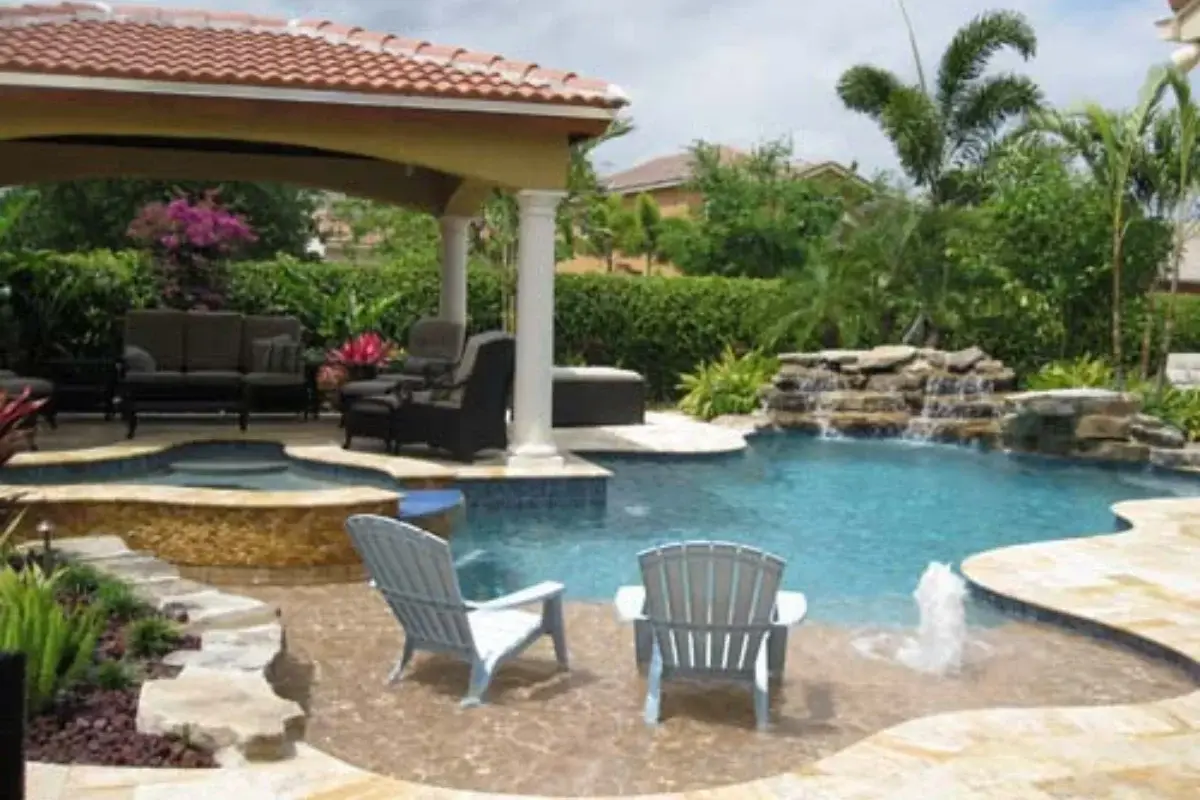
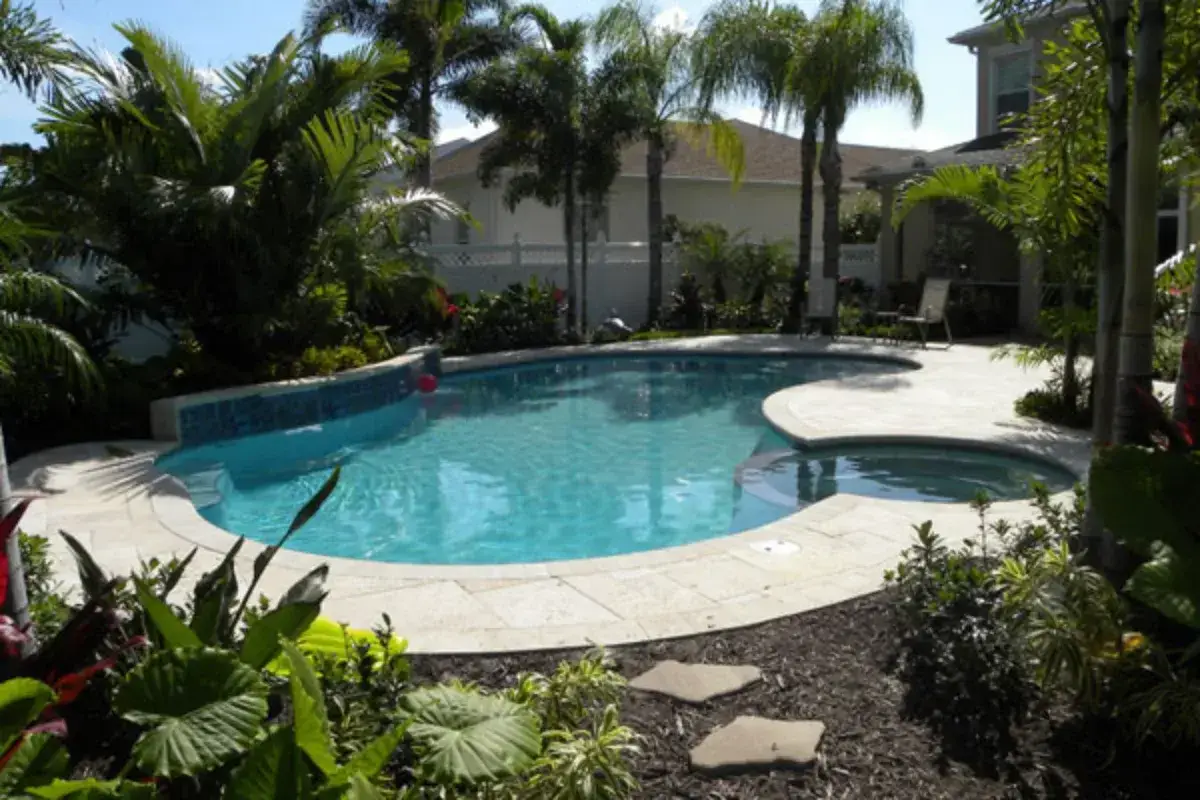
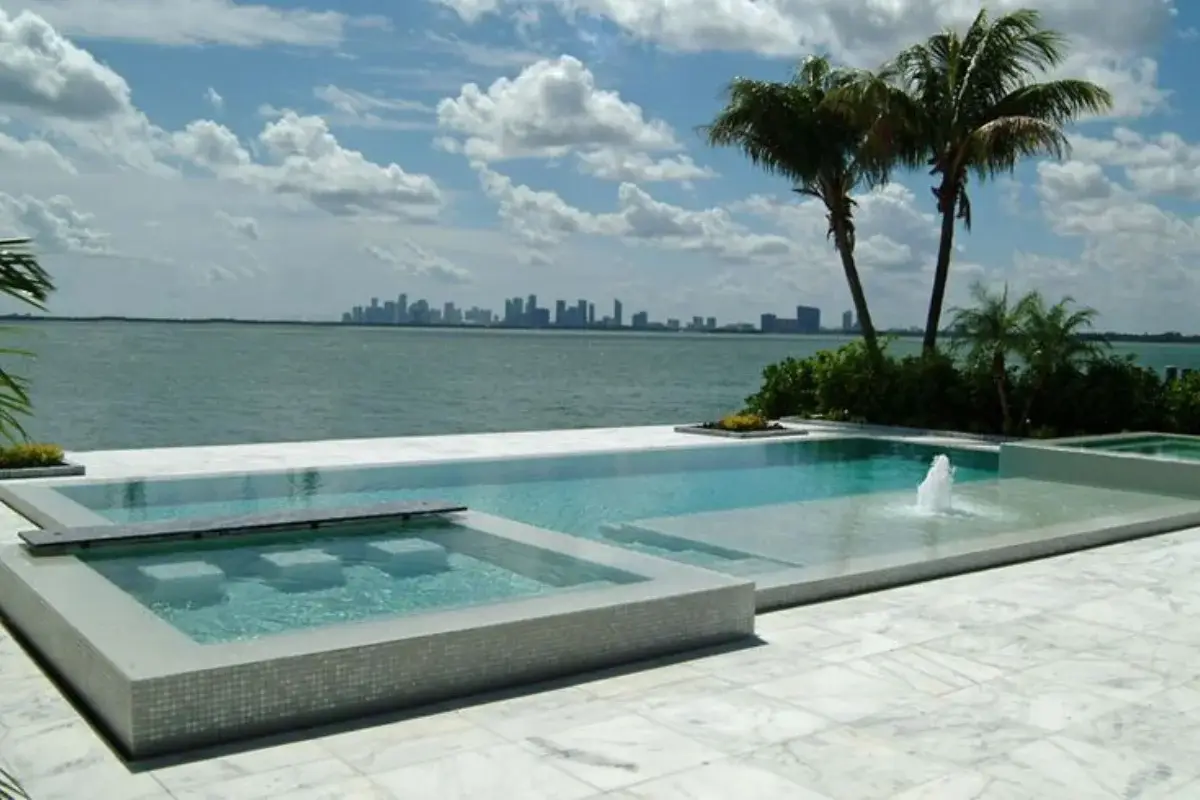
Shape is where most people start and it should be near the end. Rectangular and geometric pools suit contemporary and traditional architecture with defined lines, fit efficiently into rectangular lots, and pair naturally with linear coping and decking. Freeform pools with curved outlines suit wooded lots, sloping ground, and homes with softer architecture, and they can work around an existing tree or grade change that a rectangle would fight.
Our geometric pools and freeform pools galleries show both in real backyards, which settles the question faster than any description. Once shape is decided, the finish and tile choices in how finish color decides your water color determine how it actually looks, and gunite, fiberglass, and vinyl compared covers what it is built from.
Design the Safety In, Not On
Georgia requires barriers around residential pools, and where that barrier runs affects sightlines, circulation, and how the yard reads. Deciding it during design means it can follow a level change, sit behind planting, or use frameless glass where the view matters. Deciding it after construction usually means a fence line through the middle of a finished landscape.
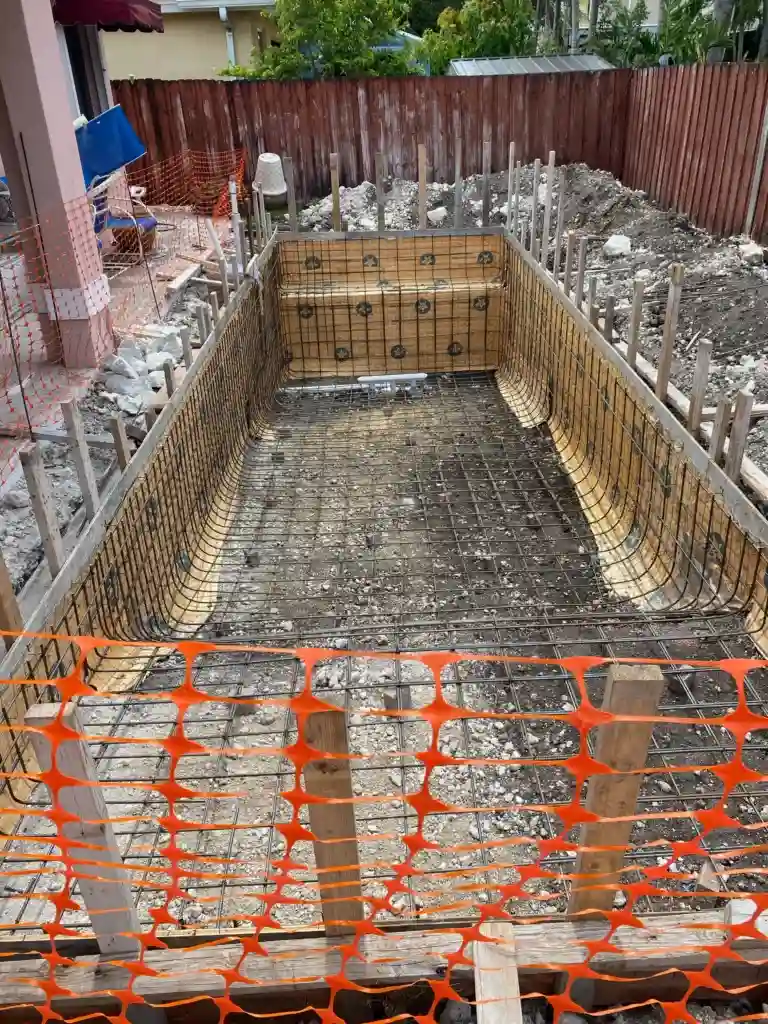
The same logic applies to the things that need to be in place before concrete: conduit for pool lighting, plumbing for any pool features and add-ons, and equipment locations. Sightlines from the kitchen to the shallow end are worth planning deliberately if you have young children. Our pool fencing and safety options are considerably less intrusive than most people picture.
What It Will Cost to Run
Size and depth are also running-cost decisions, because both determine water volume, and volume determines heating and chemical demand. A larger, deeper pool is a permanently larger monthly commitment. This is a further argument for building the pool you will use rather than the largest one that fits. Equipment sizing matters here too, and pool equipment upgrades and the sourced figures in our running-costs guide cover that side.
When you are ready to move from design to build, the ten steps of a custom build sets out the sequence and questions to ask any pool contractor covers choosing who does it. You can hear from clients we have built for, check the communities we build in, and review financing the build.
Frequently Asked Questions
What is a good size for a backyard pool?
For most families, around 12 by 24 feet is comfortable without dominating a typical yard, and it is the size we build most often. Around 16 by 32 suits households that host regularly but needs a genuinely large yard once decking and circulation are included. On smaller lots, 10 by 20 or less built well is usually a better result than a larger pool squeezed in.
How deep should a swimming pool be?
For general family use, roughly three and a half feet in the shallow area to about five or six feet at the deepest point. Four to five feet is the most useful depth overall, since adults can stand comfortably and it is safe for play. Depths of eight feet and more were built for diving boards and are rarely justified now, since they add water to heat and treat while reducing the area people actually use.
Can I fit a pool in a small backyard?
Usually, yes, though it may be a different pool than you first pictured. A compact pool of around 10 by 20, or a plunge pool, built with good materials and proper decking, works very well on smaller subdivision lots. Shape can also be used to fit the lot, running narrow along a boundary rather than dividing the yard in half.
Should I choose a rectangular or freeform pool?
Let the house and the lot decide. Rectangular and geometric pools suit defined architecture and fit efficiently into rectangular yards. Freeform suits wooded lots, sloping ground, and softer architecture, and can work around an existing tree or grade change. Both can be built to any size, so shape is a style and site question rather than a functional one.
Tell Us How You Will Use It
You dream it, we build it. Aqualis Pools is a family owned, licensed and insured builder with more than 20 years of experience, backed by warranties of 15 years structural, 15 years plaster, and 3 years equipment, serving Georgia and the surrounding Georgia communities. Tell us how you actually plan to use the pool and we will size it accordingly, including when that means building something smaller than you expected. Call +1 (770) 373-8405 or tell us how you will use it. The design and quote are free.