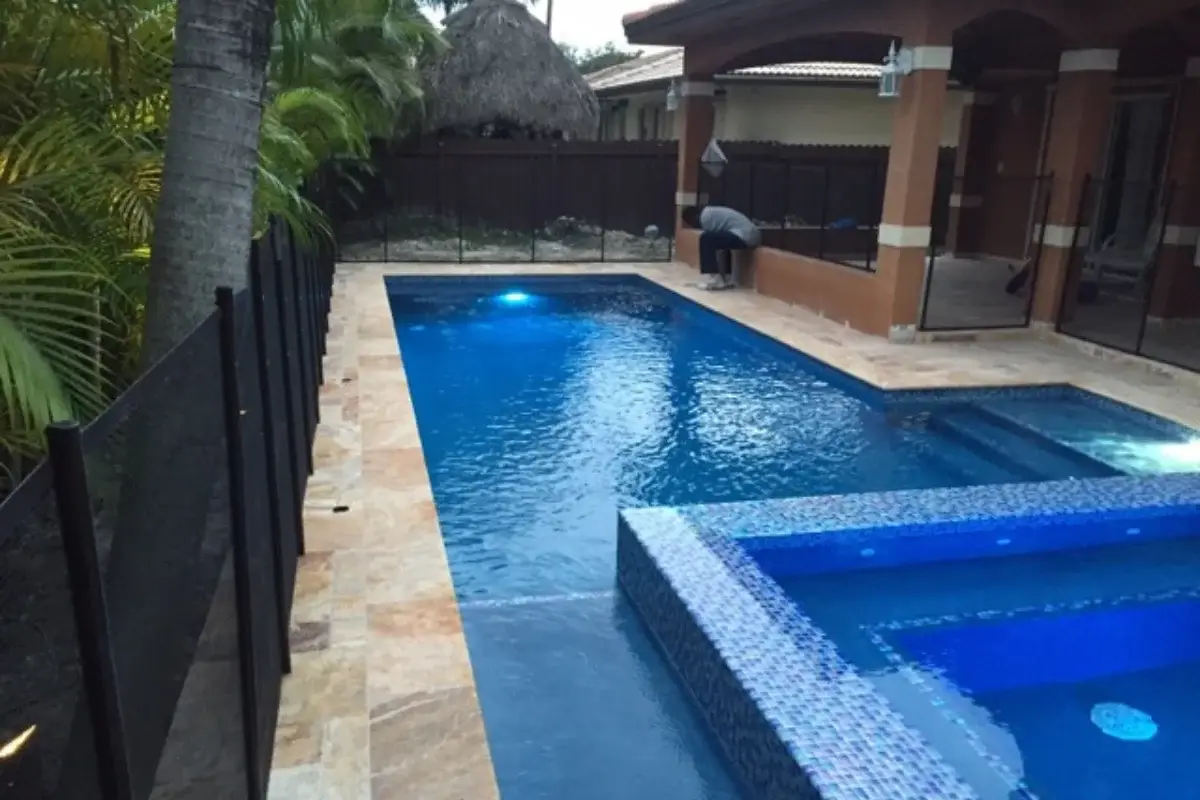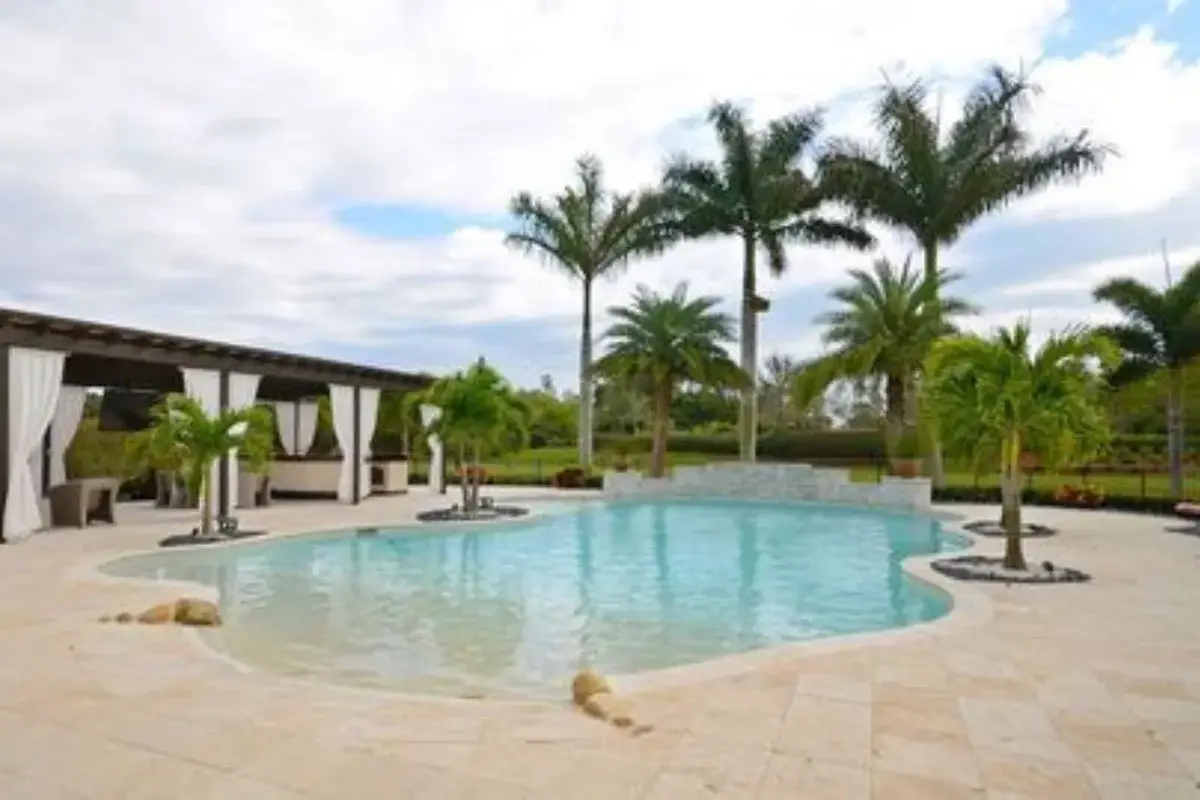
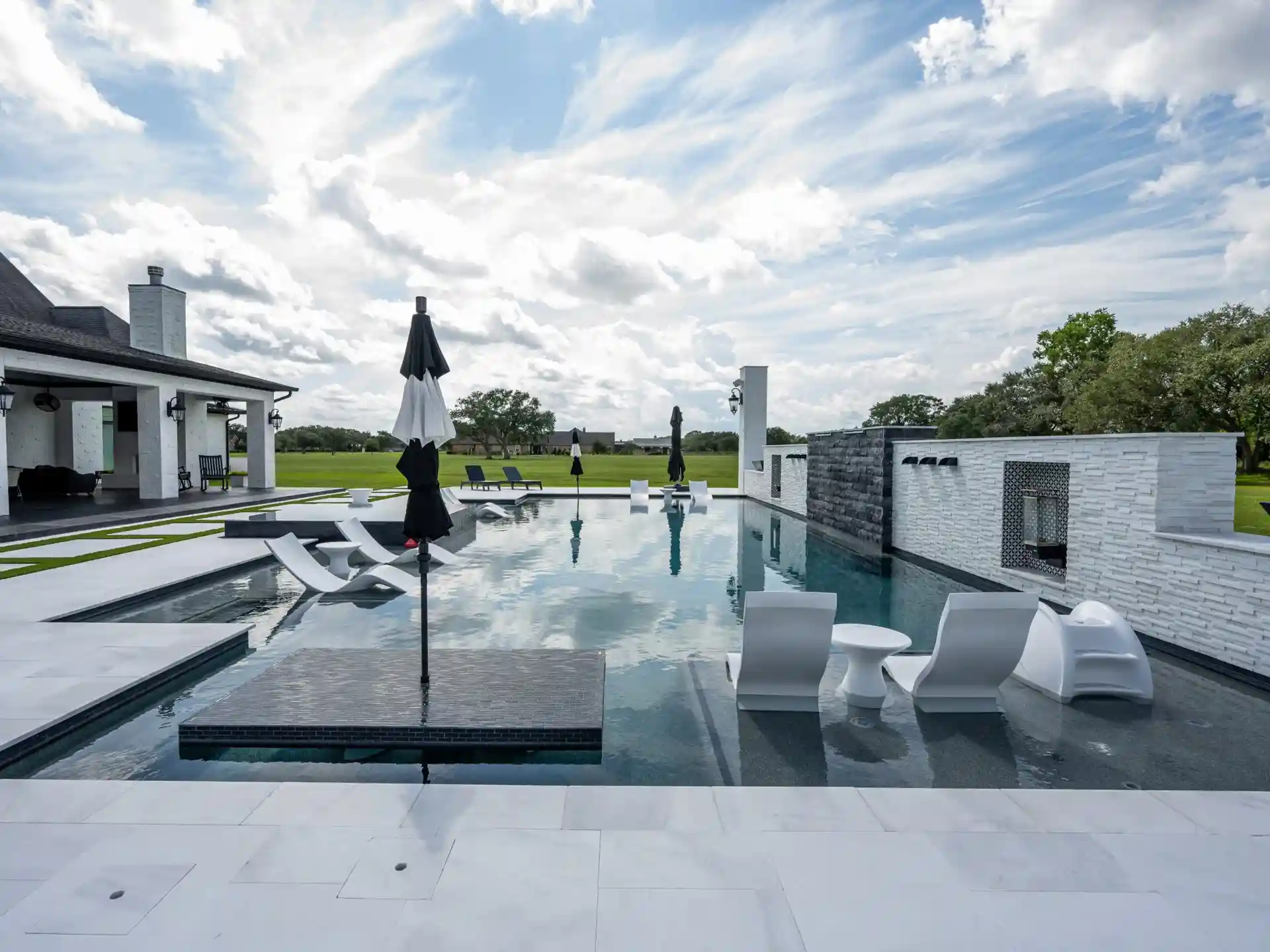
Almost everything you can see in a finished pool can be changed later. The interior finish gets renewed, tile and coping get replaced, decking gets resurfaced, equipment gets upgraded. What cannot be changed is the shell, the steel inside it, and the plumbing buried underneath, and those are decided in the first few weeks of a build that lasts decades.
So this guide starts with the decision that actually matters and works outward. After more than 20 years of new pool construction around Georgia and Gwinnett County, our family owned team has a clear view on it, and we will also tell you where the alternatives are genuinely the better answer.
The Three Types of In-Ground Pool
| Type | Design flexibility | Strengths | Trade-offs |
|---|---|---|---|
| Gunite or shotcrete (concrete) | Any shape, any size, any depth. Tanning ledges, benches, and spas formed into the structure | Longest-lived option. Interior finish is renewed periodically rather than the shell being replaced | Longest build time of the three, and the interior finish needs renewing every 10 to 20 years depending on material |
| Fiberglass | Pre-molded shells, so shape and size are limited to what is manufactured | Smooth non-porous surface, quick installation, low chemical demand | Cannot be customized, size limited by road transport, and shell repair is specialized |
| Vinyl liner | Flexible on shape within the panel system used | Lowest upfront cost, smooth surface | Liner is a consumable and needs replacing periodically. Vulnerable to punctures |
Gunite and Shotcrete
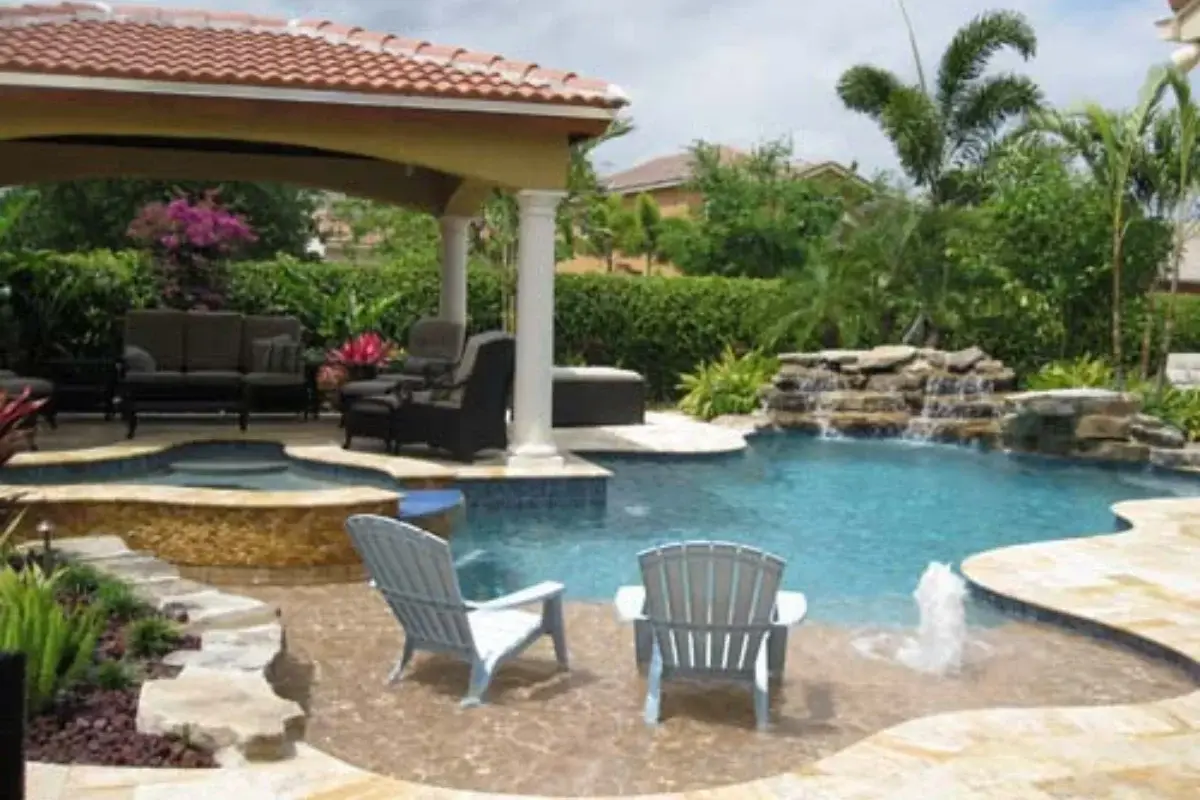
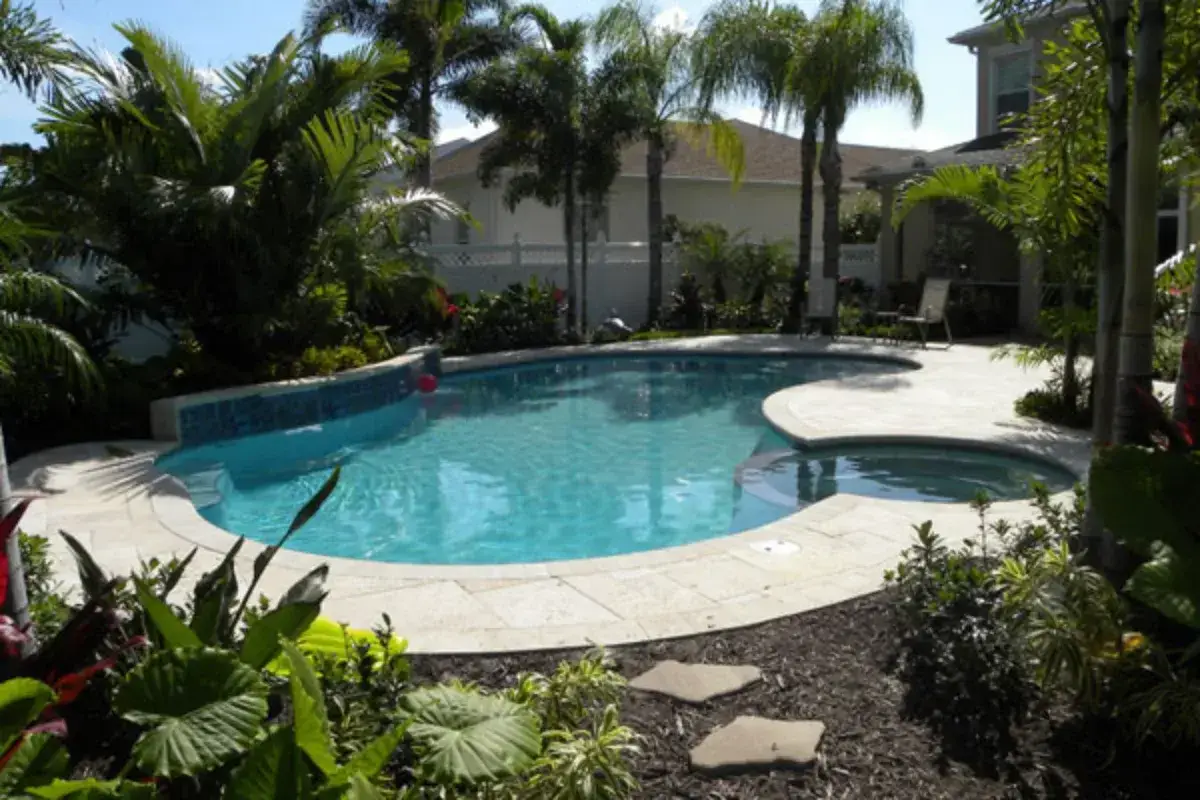
Both terms describe concrete sprayed at high pressure over a steel framework, and the difference between them is when the water is added rather than anything a homeowner needs to worry about. It is what we build, and the reason is design freedom: any shape, any depth, with tanning ledges, benches, and an integrated spillover spa formed as part of the structure rather than dropped in.
A gunite shell is a permanent structure. The interior finish on top of it is the consumable part, renewed every ten to twenty years depending on the material, and that is a refinishing job rather than a replacement. It is the longest-lived option and it takes the longest to build.
Fiberglass
A pre-molded shell delivered whole and set into the excavation. Installation is quick, the surface is smooth and non-porous, and chemical demand tends to be lower. The limitation is fixed: you choose from shapes a manufacturer makes, sizes are capped by what can travel on a road, and depth options are limited. If one of those shells is exactly what you want and your access allows delivery, it is a perfectly good pool. It just cannot be custom.
Vinyl Liner
A supporting wall system with a vinyl membrane inside it. Lowest upfront cost of the three, and the surface is smooth. The liner is a consumable that needs periodic replacement and is vulnerable to punctures, so the lifetime cost picture differs from the purchase price. It remains the most affordable route into pool ownership.
|
What Should Be Specified in a Construction Quote
This is the table we would take to a quote comparison. Most of it is invisible in the finished pool, which is exactly why it is worth asking about.
| Element | What should be specified | Why it matters |
|---|---|---|
| Steel reinforcement | Bar size and spacing set by the engineered plan, tied not just laid, with correct concrete cover | This is what resists cracking as ground moves. It is fully buried within hours of being placed, so it is the easiest place to cut corners |
| Shell | Gunite or shotcrete placed to the specified thickness and properly cured | Thickness and curing determine structural life. Ask what thickness is quoted |
| Plumbing | Correctly sized rigid PVC, pressure tested before backfill and before concrete | A leak in buried plumbing is found years later and reached by breaking concrete. Pressure testing before burial is the whole point |
| Interior finish | Plaster, quartz aggregate, pebble, or polished aggregate | Determines feel underfoot, stain resistance, and how often the pool is refinished |
| Waterline tile and coping | Frost-durable tile, correctly bedded, with coping set true and drained | Georgia freeze cycles find any tile that was not bonded properly |
| Decking | Pavers, travertine, porcelain, or concrete on a prepared and drained base | The base matters more than the surface. Drainage should run away from the pool |
| Equipment | Variable-speed pump, filtration sized to volume, and heating if specified | Sizing to the actual pool rather than to a default is what determines running cost |
| Bonding and electrical | Equipotential bonding of shell, water, and surrounding metal, GFCI protection, inspected | A code and safety requirement, not an optional extra. Verify it is in the quote |
If two quotes differ substantially and you cannot see why, the difference is usually in this table rather than in anything visible. Our guide to the questions to ask any pool contractor covers how to make quotes genuinely comparable.
The Steel Is the Part Nobody Sees
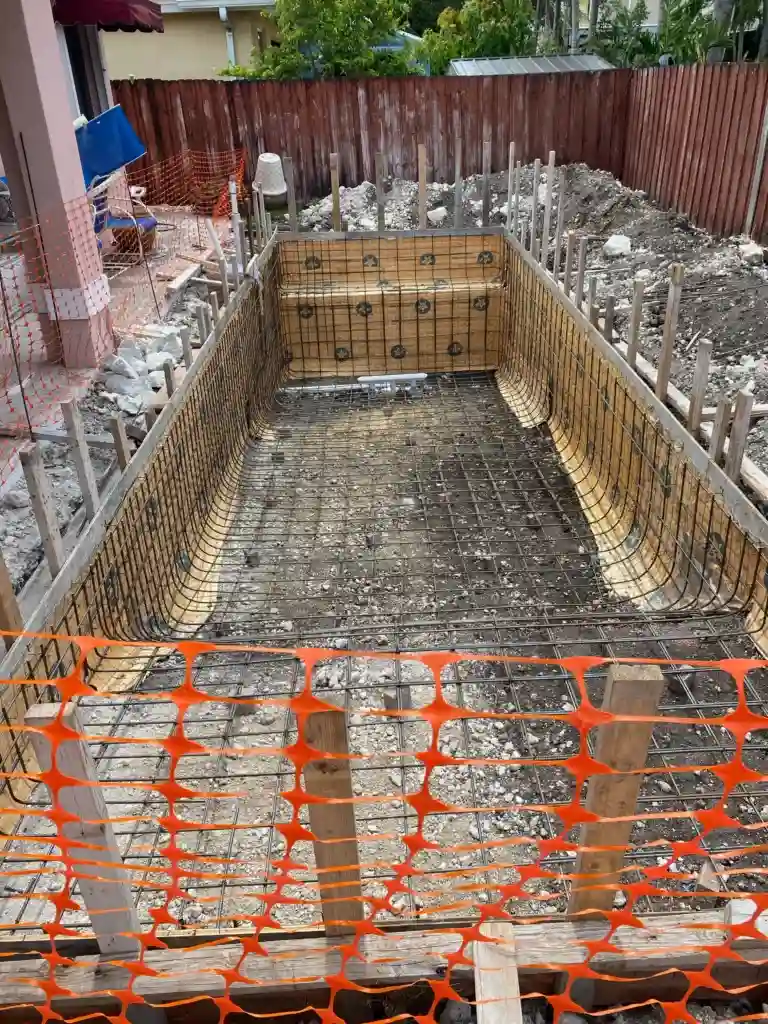
Reinforcing steel is placed and tied before any concrete, then buried permanently within days. Bar size, spacing, and how it is tied are set by the engineered plan for your specific site, because Georgia clay expands and contracts with moisture and the steel is what holds the shell together through that movement.
We walk clients through the site at the steel stage deliberately. It is the last moment the structure is visible, and a builder confident in their specification will want you to see it. The same principle applies to plumbing: rigid PVC, correctly sized, pressure tested before it is backfilled and before concrete goes on. A leak in buried plumbing surfaces years later and is reached by breaking concrete, which is why the pressure test before burial is not a formality.
Finishes, Tile, and Coping
Interior finishes range from plaster through quartz aggregate to pebble and polished aggregate, and the choice affects feel underfoot, stain resistance, and how often the pool is refinished. The same options apply whether you are building new or planning pool resurfacing later. Because finish color determines water color, that decision is worth more attention than most people give it, and how finish color decides your water color covers it properly.
Waterline tile needs to be frost-durable and correctly bedded, because a handful of hard freezes each winter will find anything that was not bonded properly. pool tile and coping should be specified together with the finish rather than chosen separately, and coping should be set true and drained so water leaves the edge rather than sitting on it.
Decking, Equipment, and the Things Around the Pool
Decking is usually the largest area in the project and the base under it matters more than the surface on top. Pavers, travertine, porcelain, and concrete all work when laid on a prepared, compacted, drained base, and none of them work for long when they are not. Light-colored pool decking also stays significantly cooler underfoot in July, which is a comfort decision as much as an aesthetic one, and it should be planned with the surrounding hardscaping around the pool rather than after it.
On equipment, the specification that matters is sizing rather than brand: filtration matched to actual water volume, and a variable-speed pump. what the equipment side actually saves sets out the published figures on running costs. A saltwater conversion is easiest to specify at build. pool lighting and any pool features and add-ons need their plumbing and conduit run before the deck goes down, and pool fencing and safety barriers are better designed in than added afterward.
Where the Money Is Worth Spending
If a budget needs to come down, the order matters. Deck square footage, deferred features with plumbing stubbed for later, and phased surrounding work all preserve the pool. The shell, the steel, the base preparation, and the plumbing do not, because none of them can be revisited without demolition.
We would rather build a smaller pool properly than a larger one thinly, and we say so at quoting rather than afterward. If the full design is the right answer, financing the build is usually better economics than building twice. For the sequence this all follows, the ten steps of a custom build sets it out, and designing the pool itself covers shape and siting. You can see pools we have built, read from clients we have built for, and check the communities we build in. We also handle pool remodeling and pool equipment upgrades on existing pools.
Frequently Asked Questions
What is a gunite pool?
A gunite pool has a shell of concrete sprayed at high pressure over a tied steel framework, then finished with plaster, quartz, or pebble on the inside. Shotcrete is the same method with the water mixed in earlier. Because the shell is formed on site rather than pre-molded, it can be any shape, size, or depth, which is why custom pools are built this way.
Is a fiberglass or concrete pool better?
It depends on what you want. Fiberglass installs faster, has a smooth non-porous surface, and tends to need less chemical attention, but you are limited to manufactured shapes and sizes and the shell has to be delivered by road. Concrete, meaning gunite or shotcrete, can be any shape and depth with built-in features, and lasts longest, but takes longer to build and needs the interior finish renewed periodically.
How long does a gunite pool last?
The shell itself is a permanent structure when built correctly on a properly engineered steel framework. What gets renewed is the interior finish, typically every 7 to 12 years for plaster, 10 to 15 for quartz, and 15 to 20 or more for pebble. That is refinishing rather than replacement, which is the main structural difference from a vinyl liner pool.
What should I check in a pool construction quote?
The things you will never see: steel size and spacing against the engineered plan, shell thickness, whether plumbing is pressure tested before burial, base preparation under the decking, equipment sized to the pool rather than to a default, and bonding and GFCI protection with inspection. Large price differences between quotes almost always come from this list rather than from anything visible.
Ask Us What Is in the Specification
You dream it, we build it. Aqualis Pools is a family owned, licensed and insured builder with more than 20 years of experience, backed by warranties of 15 years structural, 15 years plaster, and 3 years equipment, serving Georgia and the surrounding Georgia communities. We will give you a written specification rather than a single number, and we will explain every line of it. Call +1 (770) 373-8405 or get a specified written quote. The visit, design, and quote are free.