Plenty of beautiful backyards in Gwinnett County go unused from late June to early September. The furniture is good, the patio is well built, and nobody sits out there because it is 92 degrees at six in the evening, the humidity has not broken, and the mosquitoes arrive at dusk.
Comfort outdoors in Georgia is not a matter of better cushions. It is a design problem with specific, solvable causes, and after more than 15 years of outdoor living projects across the Georgia area our family owned team has learned to design for them from the start. Here is how we think about each one.
Start with Where the Sun Actually Falls
Before recommending any structure, we look at orientation, because it determines which solution will work and which will waste your money.
- West-facing patios are the hardest. They take direct low-angle sun from mid-afternoon through evening, which is exactly when people want to use them. Overhead shade alone does not solve this, because the sun comes in sideways. West exposures need a solid roof, a vertical screening element, or planting on the western edge.
- South-facing spaces take high overhead sun. This is the easiest to solve, because overhead structures work well against high-angle light. A well-oriented pergola does real work here.
- East-facing patios are comfortable in the evening. They are often the best sited spaces in a yard and need the least intervention.
- North-facing areas stay cool and can be damp. The problem here is usually drainage and moss on surfaces rather than heat.
Most homeowners are surprised how much this changes the recommendation. It is also why we walk the site at the time of day you intend to use the space rather than at ten in the morning.
Shade: What Each Structure Actually Blocks
The three options are not interchangeable, and the differences matter more here than in milder climates.
Pergolas filter light rather than block it. Beam spacing and orientation determine how much shade you actually get, and a pergola running the wrong way casts almost none at the hour you need it. They keep the space feeling open, which most clients want over a dining area, and they can carry a retractable canopy if you want the option of full cover. On a west exposure a bare pergolas installation on its own will disappoint you.
Pavilions and solid roofs block sun completely and, critically, keep rain off. That second point is what turns a cancelled gathering into a memorable one, and in a climate with frequent afternoon storms it is worth more than it sounds. A roof also allows ceiling fans, which is the single most effective comfort intervention available in humid weather. Our pavilions work is what we recommend when a space needs to be usable regardless of conditions.
Shade sails and freestanding structures cover a target area for a fraction of the cost of a permanent build, and they suit spaces where a fixed roof would overwhelm the yard or block a view. Our shade structures options work well over a seating cluster or a play area.
|
Humidity: Why Shade Alone Is Not Enough
Shade solves radiant heat. It does nothing for humidity, which is why a shaded Georgia patio in August can still feel oppressive. Moving air is the answer, and it is the upgrade our clients underestimate most.
Ceiling fans under a solid roof make a difference out of proportion to their cost, because moving air accelerates evaporation from skin and that is what actually registers as cooler. They require a rated structure and licensed electrical work, which is one more reason a roofed pavilion earns its price over a pergola. Where a roof is not practical, well-placed high-volume freestanding fans do some of the same work. Keeping the space open to prevailing breeze helps too, which is why we avoid enclosing a patio on all sides with solid walls or dense planting. If you want fans on schedules or remote control, putting fans and lighting on automated control covers that.
Surfaces: Heat Underfoot Is a Comfort Decision
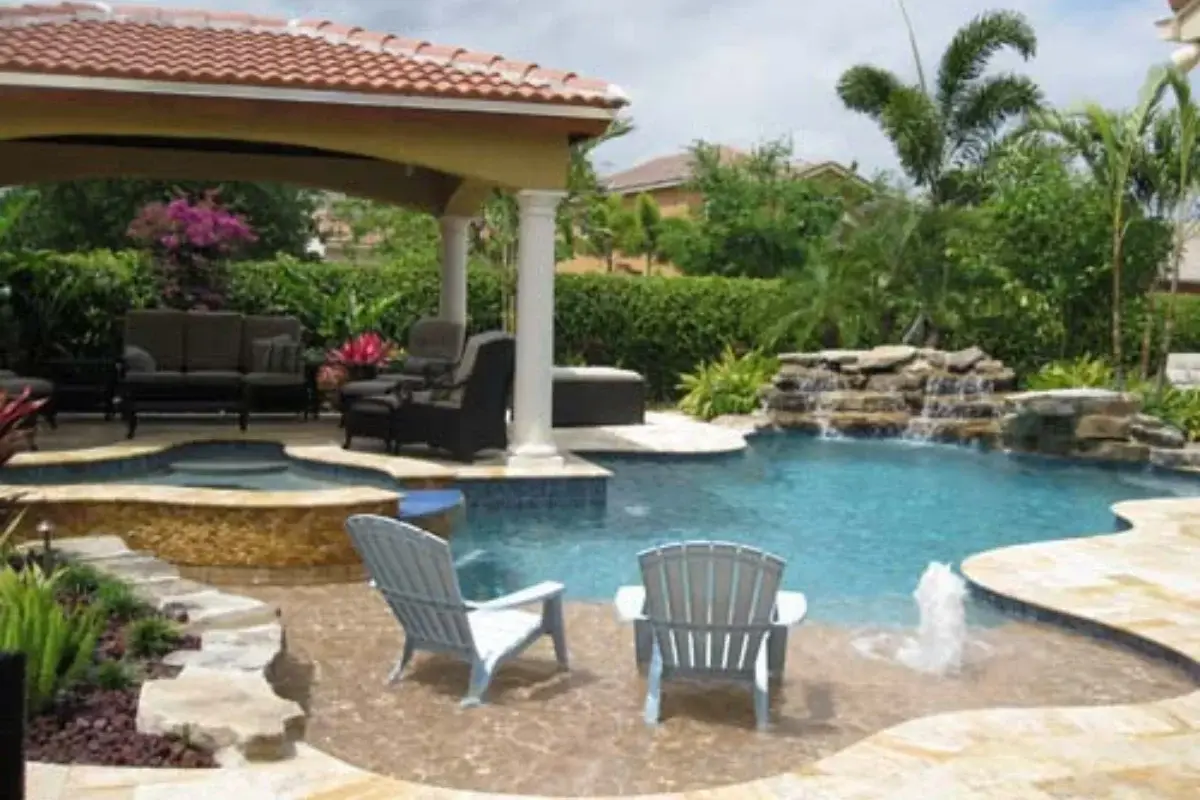
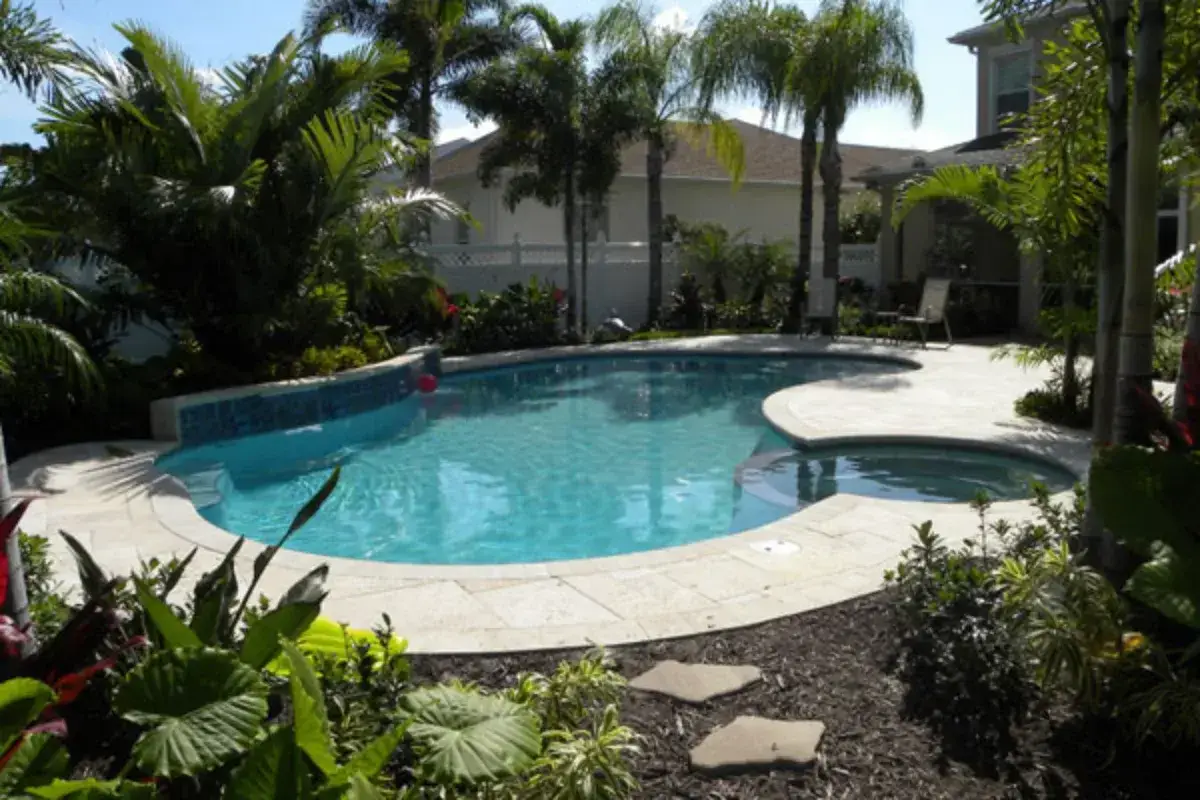
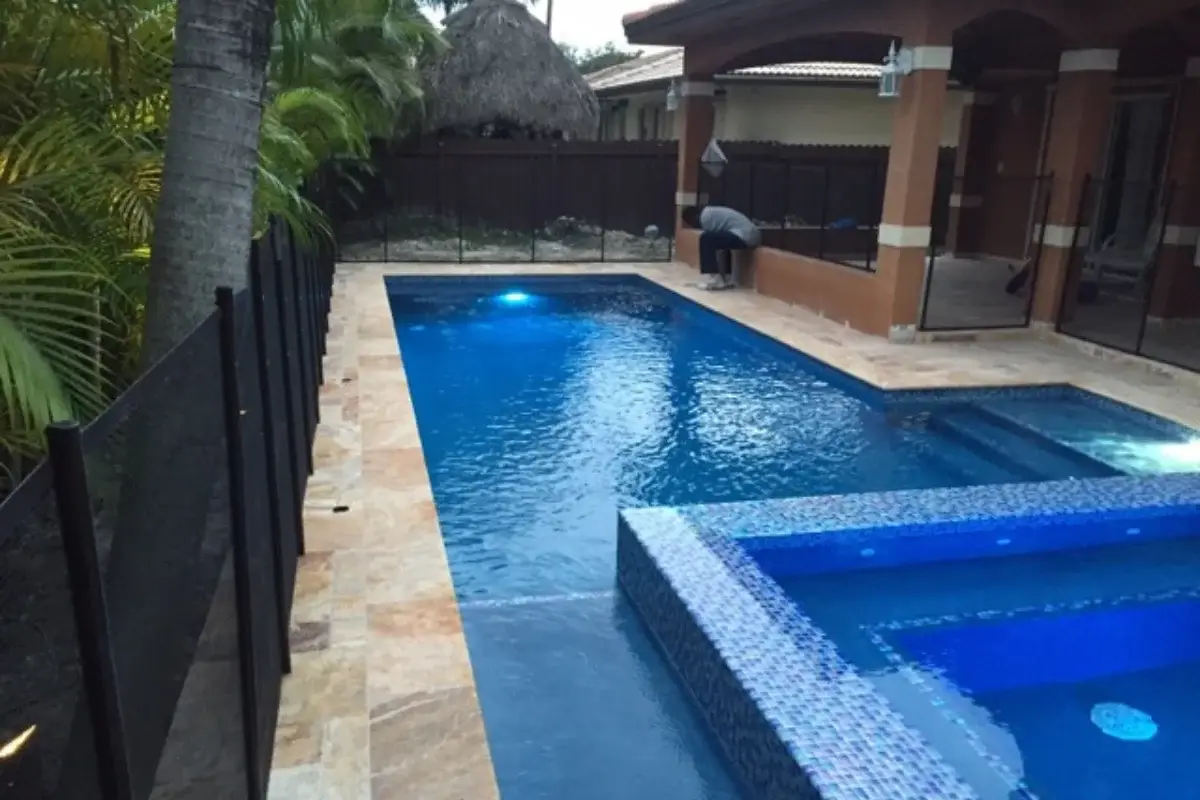
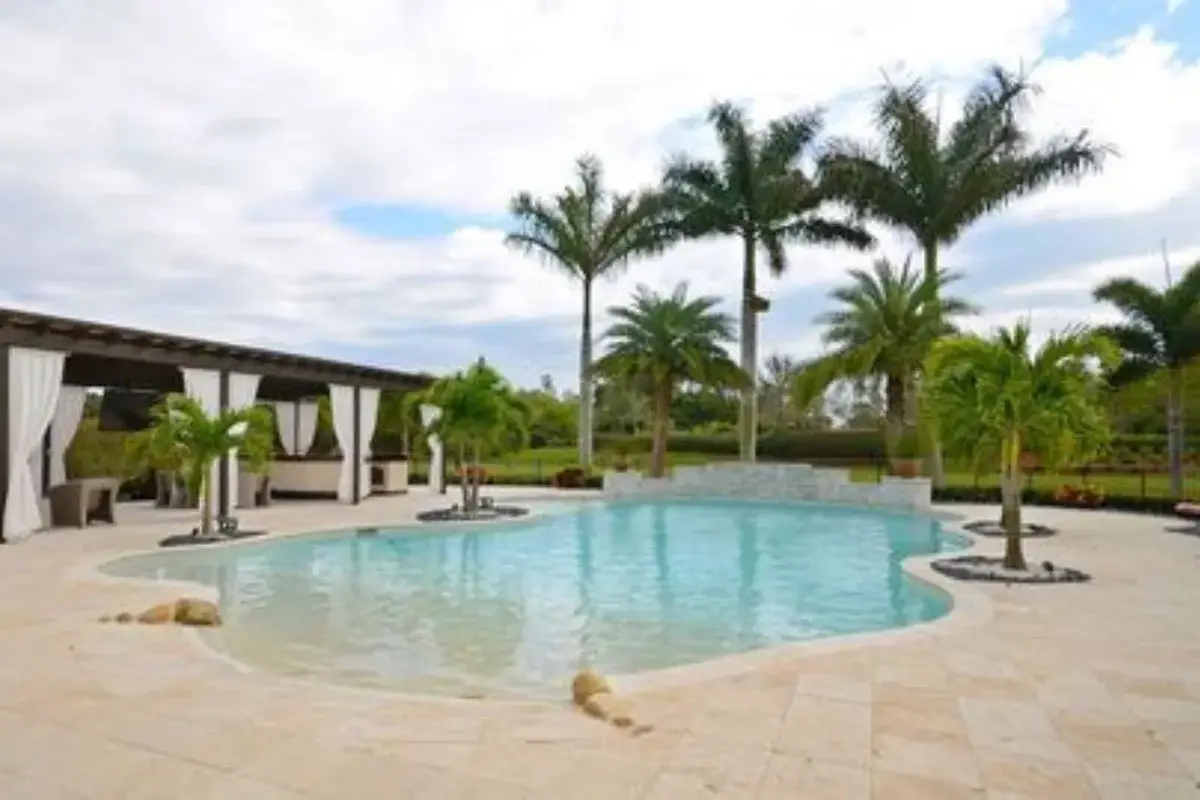
The material you walk on affects comfort more than most people expect, particularly around water where people are barefoot. Light-colored paver patios and travertine stay dramatically cooler in direct sun than dark stone or dark composite boards, and around a pool that difference is the difference between a deck people cross comfortably and one they hop across in July. It is the most common complaint we hear about pool decking we did not install. Our guide on comparing surfaces and how they handle heat sets out the options side by side.
Mosquitoes: Design Choices That Help
Mosquito season here runs from roughly April into October, and design decisions genuinely affect how bad it is in your yard. The most useful interventions are about water and air.
- Eliminate standing water. Mosquitoes breed in very small amounts of still water. Proper grading and drainage across the patio, planting beds, and around downspouts removes the breeding sites rather than treating the symptom. Poor drainage is the most common cause we find, and it is a construction issue.
- Keep air moving. The same fans that address humidity make it substantially harder for mosquitoes to hold position around a seating area. This is the cheapest effective intervention available.
- Site seating away from dense damp planting. Shaded, moist vegetation is where they rest during the day. A seating area with a buffer of open ground between it and heavy planting is noticeably better.
- Consider a screened structure if you host in the evening. Full screening is the only approach that removes the problem outright, and it is worth discussing if evening use matters to you.
Chemical treatment and mosquito control services are outside what we do, and are best discussed with a licensed pest control company. What we can influence is drainage, airflow, and layout, which is where the durable improvement comes from.
Privacy: The Comfort Factor Nobody Mentions
A backyard overlooked by neighbors does not feel relaxing however well it is built, and on the lot sizes common in newer Gwinnett subdivisions this comes up constantly. Structures help: a pavilion or pergola with a screening panel on one side blocks a specific sightline without walling the yard in. A seat-height or taller retaining walls installation with planting above it raises the effective screen height using grade rather than fence. Level changes and considered hardscaping can shift a seating area out of a neighbor’s line of sight entirely, which usually beats adding height.
The approach we take is to identify the two or three sightlines that actually matter, standing where you will sit, and address those specifically. Screening the whole perimeter is expensive, makes a yard feel smaller, and blocks the breeze you want in August.
Extending the Comfortable Season
Comfort works in both directions. From October through April the constraint is cold rather than heat, and a fire feature is what keeps a yard in use. An outdoor fireplaces installation blocks wind as well as radiating heat, which makes it more effective than an open fire pits on exposed sites, though fire pits are more sociable and less expensive. A spillover spa extends use into genuine winter. Lit walkways and pathways matter more in the dark months, when people are moving between the house and the fire after sunset.
See covered spaces we have built across the area, hear from clients who use theirs in August, check the areas we serve, and review financing a covered structure. For planning around the people who use the space, designing around who uses the yard covers that ground.
Frequently Asked Questions
What is the best shade option for a hot patio?
It depends on orientation. West-facing patios take low-angle afternoon sun and need a solid roof or vertical screening, because overhead shade alone will not block it. South-facing spaces take high overhead sun and are well served by a properly oriented pergola. A roofed pavilion is the most complete solution anywhere, since it blocks sun and rain and allows ceiling fans.
How do I make my patio cooler in Georgia summers?
Combine shade with moving air, because shade alone does not address humidity. Ceiling fans under a solid roof are the most effective single intervention. Choose light-colored paving rather than dark, which stays significantly cooler underfoot, and avoid enclosing the space so completely that you block the prevailing breeze.
What design choices help with mosquitoes?
Drainage first: eliminate standing water through proper grading, since even small amounts are breeding sites. Then airflow, because fans make it hard for mosquitoes to hold position. Site seating away from dense damp planting, and consider a screened structure if evening entertaining matters. Chemical treatment is a job for a licensed pest control company rather than a builder.
How can I add privacy without walling in my backyard?
Identify the two or three sightlines that actually matter from where you will sit, and address only those. A screening panel on one side of a structure, planting raised on a retaining wall, or repositioning the seating area using a level change usually works better than perimeter fencing, costs less, and keeps the yard feeling open.
Make Your Backyard Usable in August
You dream it, we build it. Aqualis Pools is a family owned, licensed and insured builder with more than 15 years of experience and a 15 year structural warranty, serving Georgia and the surrounding Georgia communities. If there are months when your backyard sits empty, there is usually a specific reason and a specific fix. Call +1 (770) 373-8405 or tell us when your yard is unusable, and we will design around it. The consultation and quote are free.