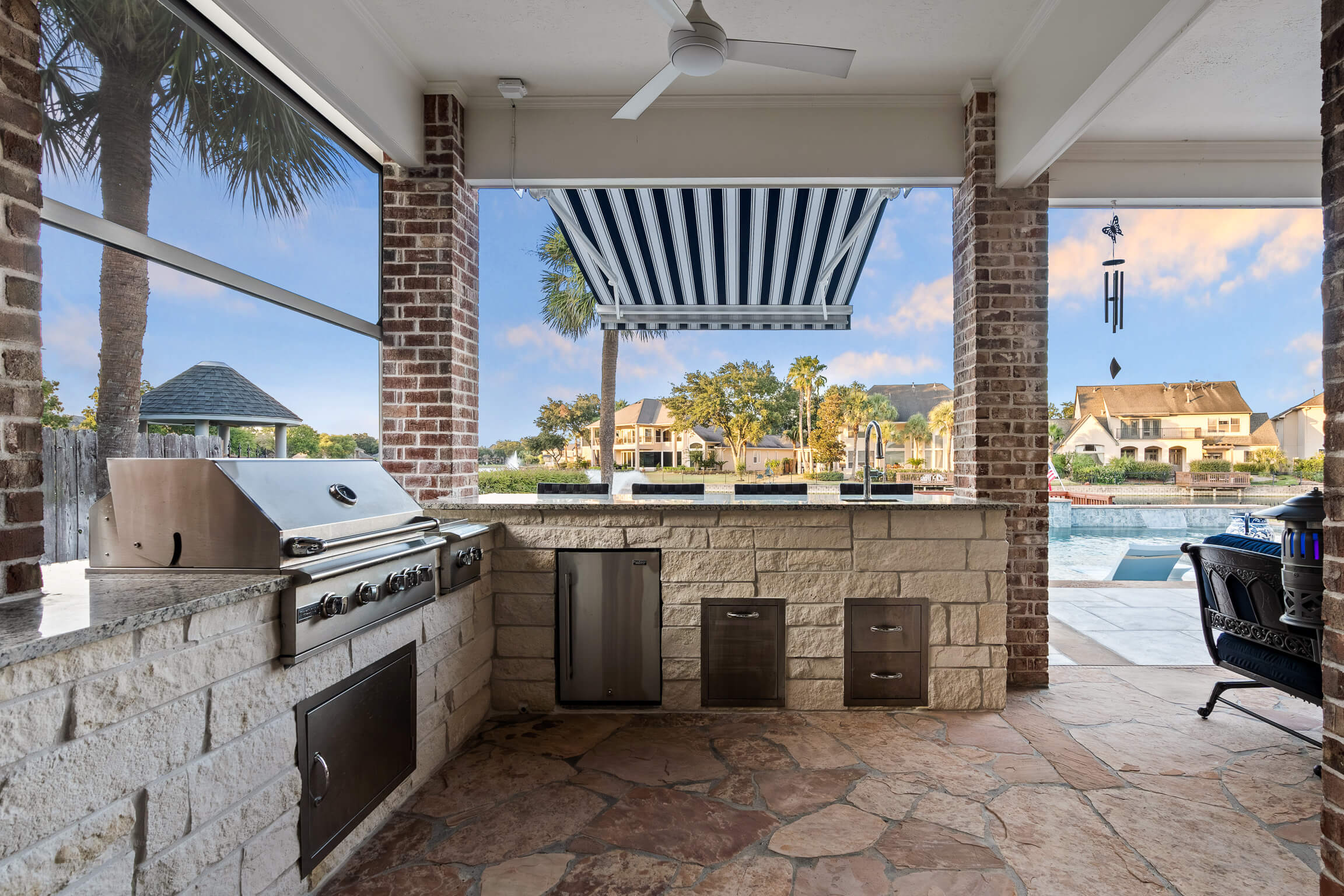
We get called out to look at failing outdoor kitchens several times a year. The pattern almost never varies: the granite is fine, the grill is fine, and the structure underneath has come apart. Doors that no longer close square. A veneer cracking along one wall. A cabinet interior that smells of mildew every summer. In nearly every case the homeowner chose good materials and someone built them onto a substructure that could not survive a Georgia year.
So this guide is about the half of an outdoor kitchen you never see. If you are still comparing surfaces, our separate guide on comparing countertops, cabinetry, and appliances covers those selections in detail. What follows is what more than 20 years of building outdoor kitchens we build across Georgia and Gwinnett County has taught our family owned team about why some last two decades and others need rebuilding in five.
Start Underground: The Foundation Decides Everything
An outdoor kitchen is masonry, appliances, and stone, which typically means well over a thousand pounds concentrated on a small footprint. Our region adds a specific complication: Georgia red clay is expansive, meaning it swells when saturated and shrinks when it dries. A slab poured on unprepared clay moves with it, and everything above the slab moves too, which is what cracks veneer and racks cabinet doors out of square.
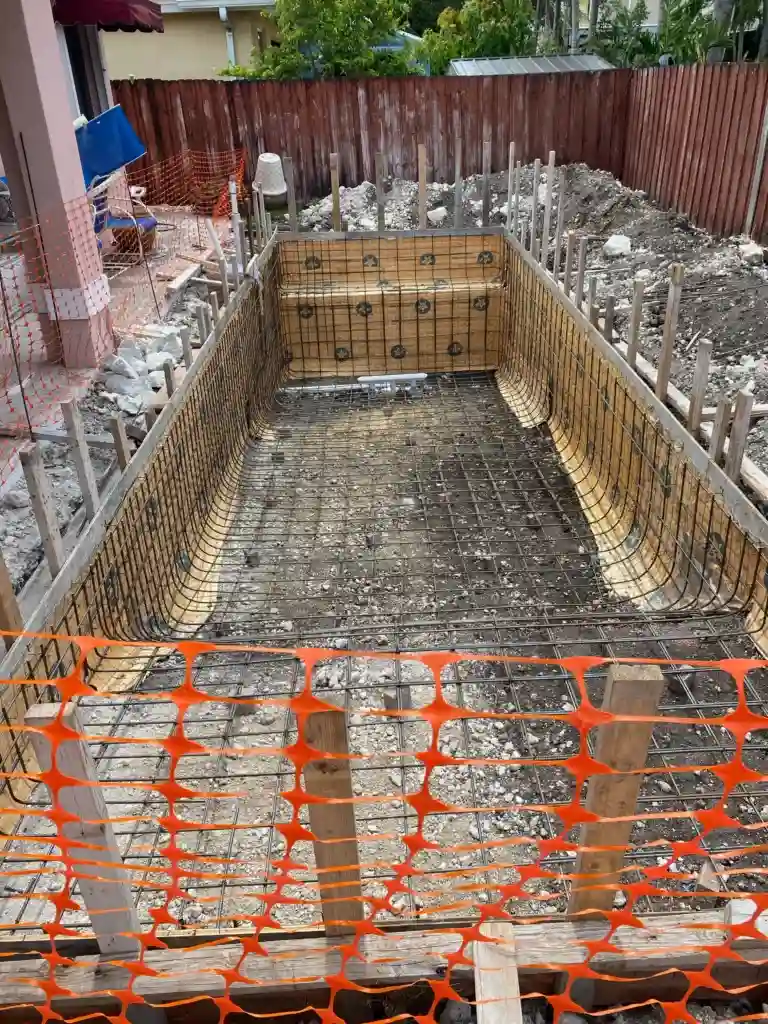
Proper preparation means excavating to stable subgrade, installing and compacting a graded aggregate base, and pouring a slab thick enough and reinforced for the load, with drainage designed so water leaves the structure rather than collecting under it. The same discipline applies to a paver patio built on a proper base and to any retaining walls nearby. None of this is visible in a finished photograph, and all of it determines whether the kitchen is still square in year fifteen.
The Frame: Where Most Outdoor Kitchens Are Won or Lost
Three framing approaches are common, and they do not age alike.
- Galvanized or stainless steel framing. Our default. It does not rot, does not feed insects, does not absorb moisture, and holds dimension through humidity swings. Combined with cement board sheathing, it accepts stone, stucco, or tile veneer without movement.
- Concrete block. Extremely durable and well suited to our climate when properly reinforced and drained. Heavier, which makes the foundation work below it even more important.
- Wood framing. The one we are usually called to replace. Even treated lumber moves with humidity, and any moisture that gets behind a veneer has nowhere to dry. It is cheaper on day one and it is the single most common cause of the failures we repair.
Whatever the frame, it needs a drainage plane and weep provision so water that gets behind the finish can escape. A sealed box that traps moisture will fail regardless of what it is made from. This is the part of hardscaping and masonry work where experience shows up years later.
|
Cabinetry and Hardware: Specify the Grade, Not Just the Metal
Stainless steel is not one material. Type 430 is common in budget outdoor cabinets and will show surface rust outdoors, particularly near a pool where chlorinated air accelerates it. Type 304, often sold as marine grade, holds up far better and is what we specify. Marine-grade polymer is an excellent alternative that will never rust, never rot, and holds color under UV.
The detail most people miss is the hardware. Hinges, screws, fasteners, and drawer slides fail long before cabinet bodies do, and a cabinet with premium panels on plated steel hinges will be sticking within three summers. Every fastener in an outdoor kitchen should be stainless. It is a small line item that decides how the kitchen feels to use in year eight.
Georgia’s Four Specific Enemies
- Freeze and thaw. We get a handful of hard freezes each year. Water absorbed into unsealed stone or a porous grout joint expands when it freezes and spalls the surface. Correct sealing and the right grout matter more here than the stone selection does.
- Humidity. Sustained summer humidity is what destroys wood framing and untreated hardware, and it is why enclosed cabinet interiors need ventilation.
- UV exposure. South and west facing surfaces take real punishment. It fades polymers, degrades sealants, and yellows resin-based countertops, which is why shade from a pergola or a pavilion extends material life as much as it improves comfort.
- Pollen and organic loading. Spring pollen sits on every horizontal surface and holds moisture against it. Porous, textured surfaces stain; dense sealed ones rinse clean. This is a genuine selection criterion in our region and it rarely appears in national buying guides.
What Reasonable Upkeep Looks Like
A properly built kitchen does not need much. Rinse surfaces after pollen season and after pool chemicals are handled nearby. Reseal natural stone on the schedule your fabricator specifies, typically every one to three years depending on the stone and its exposure. Cover or shelter appliances over winter. Keep drainage paths clear of leaves and mulch.
What we would not recommend doing yourself is anything structural, or anything involving gas, electrical, or plumbing. If a gas line needs moving, if a cabinet is racking, or if water is appearing where it should not, that is licensed work, and diagnosing it correctly is usually cheaper than the damage caused by guessing. For pools and surrounds, the same logic applies to pool deck resurfacing, pool decking, and equipment upgrades.
Repair, Rebuild, or Start Again
When we assess a failing kitchen, the honest answer depends on the frame. If the structure is sound and the problem is finish level, refacing and resealing is straightforward and worth doing. If the frame is wood and it has taken on moisture, refinishing over it only hides the problem for a season, and a rebuild on a proper substructure is the better use of the money. We say so plainly, even when it is the answer nobody wants. Larger backyard renovations often fold this into pool remodeling or complete outdoor living builds so the whole space is addressed at once, and financing a build done properly is available where that makes sense.
If you would like to see the standard we build to, browse kitchens we have built across the area, read from clients who have lived with them for years, and check the communities we build in. If you are at the earlier planning stage, our guides on deciding which features to build first and planning the space as a whole are the right place to start.
Frequently Asked Questions
How long should an outdoor kitchen last?
Built correctly on a prepared foundation with a steel or block frame, the structure should last decades, and we back our work with a 15 year structural warranty. Appliances are the shorter-lived component, typically 10 to 15 years for a quality outdoor-rated grill. When a kitchen fails early, it is almost always the substructure rather than the finishes.
What is the best framing material for an outdoor kitchen?
Galvanized or stainless steel framing with cement board sheathing, or reinforced concrete block. Both handle humidity and temperature swings without moving. We do not build outdoor kitchen frames from wood, because even treated lumber absorbs moisture and it is the most common failure we are called to repair.
Why is my outdoor kitchen cracking or rusting?
Cracking veneer usually points to movement below, meaning foundation settlement or a frame that is absorbing moisture. Rust generally means lower-grade stainless or plated hardware rather than 304 stainless. Both are worth diagnosing properly, because surface repairs over a structural cause will not hold.
Can a failing outdoor kitchen be repaired, or does it need replacing?
It depends on the frame. Sound structure with damaged finishes is very repairable. A wood frame that has taken on moisture generally needs rebuilding, because refinishing over it buys a season at most. We will assess it and give you a straight answer either way.
Build It Once, Build It Right
You dream it, we build it. Aqualis Pools is a family owned, licensed and insured builder with more than 20 years of experience and warranties to match: 15 years structural, 15 years plaster, and 3 years on equipment. We serve Georgia and the surrounding Georgia communities. Call +1 (770) 373-8405 or talk to us about your project, whether you are planning a new outdoor kitchen or trying to work out why the one you have is failing. The assessment and quote are free.