An outdoor kitchen in Georgia earns its keep for eight or nine months of the year, which means every material and appliance you choose has to survive intense summer sun, heavy spring pollen, afternoon thunderstorms, and the occasional winter freeze. At Aqualis Pools, our family owned team has spent more than 20 years designing and building outdoor kitchen design and construction projects across Georgia, Lawrenceville, Buford, and the surrounding Gwinnett County area, and the difference between a kitchen that looks new after ten summers and one that fades after two almost always comes down to the selections made before construction ever starts.
This guide walks through the choices we help homeowners make every week: countertops, cabinetry, flooring, and the appliances that tie it all together.
Why Georgia’s Climate Should Drive Every Material Decision
Outdoor kitchens in the Southeast face a specific set of stresses. Humidity swells and warps untreated wood. UV exposure fades plastics and bleaches resin-based surfaces. Yellow pine pollen coats every horizontal surface each spring, so anything porous or hard to wipe down becomes a maintenance headache. And while our winters are mild, a handful of hard freezes each year will find any material that traps water. The materials below are the ones we trust because we have watched them perform on real projects, not because a supplier catalog says so.
Countertops: Granite, Quartzite, and Concrete
- Granite: the workhorse of outdoor countertops. It shrugs off heat from pans and grill tools, resists staining when sealed, and handles UV without fading. It is our most requested surface in the Georgia area.
- Quartzite: a natural stone with the look of marble and even better weather resistance. Note the name carefully: engineered quartz, the popular indoor surface, contains resins that can yellow and scorch in direct sun, so we steer clients toward true quartzite outdoors instead.
- Concrete: cast-in-place or precast tops can be tinted and shaped to fit any design. They need periodic resealing, but they pair beautifully with a modern paver patio and integrated seating.
Cabinetry and Storage That Stand Up to Humidity
Cabinet failure is the most common regret we hear from homeowners who built with the wrong contractor or bought big-box modules. In our climate, we recommend:
- Stainless steel: marine-grade 304 stainless resists rust and wipes clean after pollen season. Powder-coated finishes add color without sacrificing durability.
- Masonry bases with stone or stucco veneer: built on site by our hardscaping crew, these match retaining walls and outdoor fireplaces for a cohesive look and will outlast any prefab unit.
- HDPE and weather-rated composites: a budget-friendlier option that will not swell, rot, or attract insects.
Flooring and Decking Underfoot
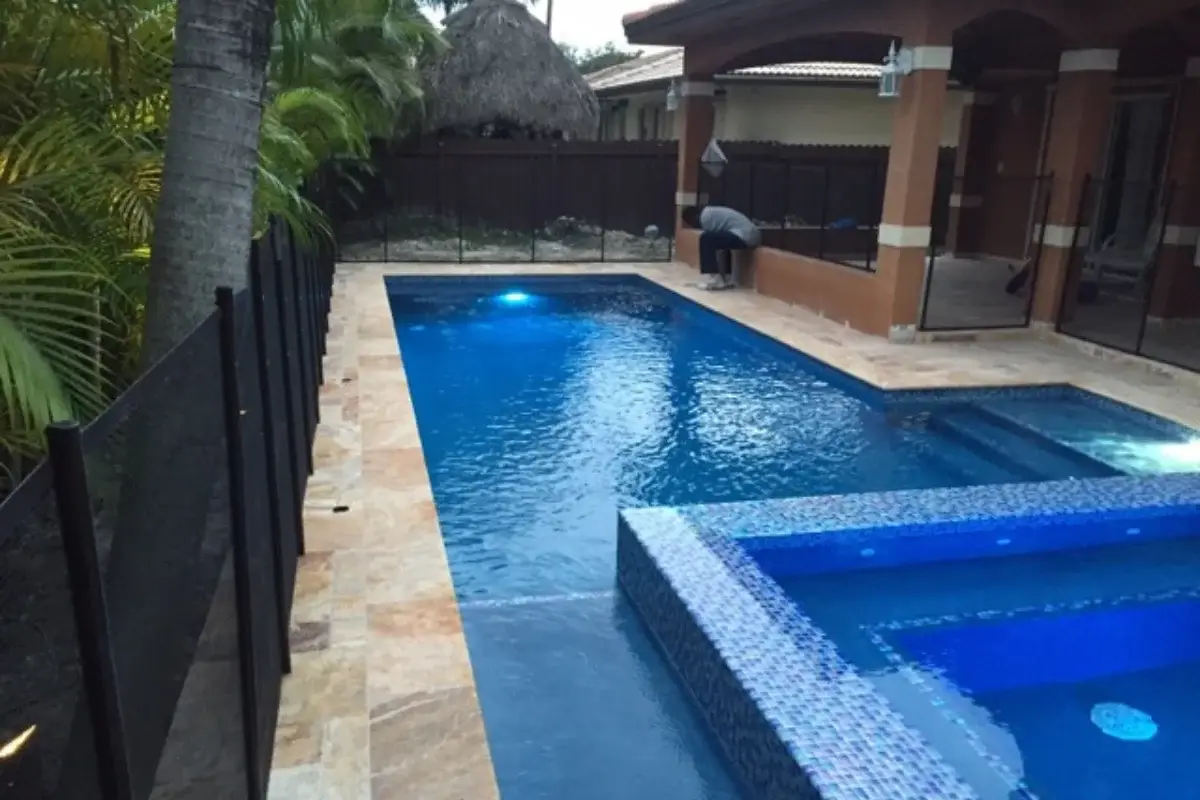
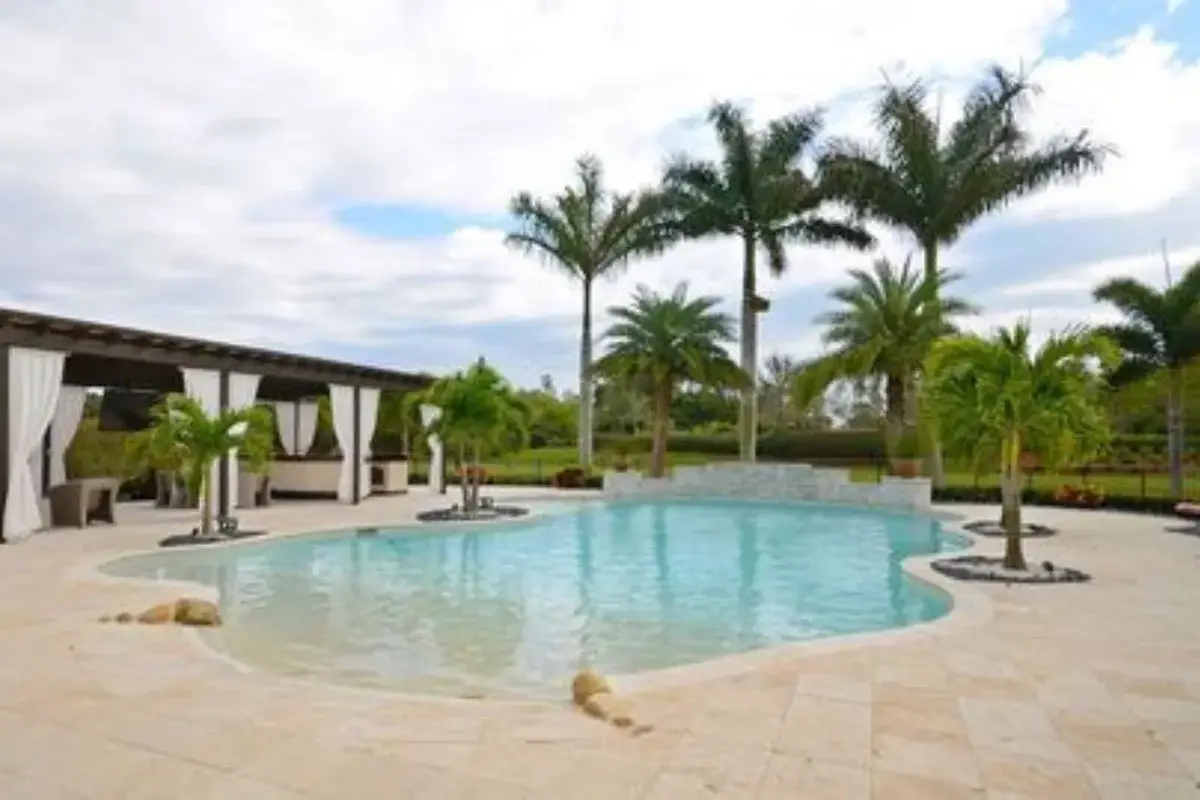
Your cooking zone needs a surface that stays safe when wet, resists grease, and handles temperature swings. Sealed concrete pavers, travertine, and porcelain tile all perform well here, and each can be color-matched to an existing pool deck or walkway. If your kitchen will sit on an elevated structure, a custom deck engineered for the added weight of masonry and appliances is essential, and it is one more reason this is not a weekend DIY project.
|
Choosing Outdoor-Rated Appliances
Appliances are where budgets are won or lost. The rule we give every client: buy outdoor-rated or do not buy it at all. Indoor units rust, void their warranties outside, and can be genuinely unsafe. Here is where to focus:
- Built-in grills: gas for convenience, charcoal for flavor, or hybrid models that do both. Look for 304 stainless construction and confirm the BTU output matches how you actually cook.
- Pizza ovens and side burners: the upgrades our clients say they use far more than expected, especially for entertaining.
- Refrigeration: outdoor-rated refrigerators and beverage coolers are built to hold temperature through 95 degree afternoons. Indoor units simply cannot.
- Sinks and prep stations: running water outside changes everything about workflow and cleanup. Plumbing them correctly, with freeze protection, is part of every kitchen we build.
If you are still deciding which features earn their space, our post on the features that elevate backyard living breaks down the options in more detail.
Utilities and Layout: What Professional Installation Involves
Behind every clean-looking outdoor kitchen is gas line sizing, GFCI-protected circuits, water supply, drainage, and ventilation for any grill under a roof. This is licensed-trade work: an undersized gas line starves a high-BTU grill, and an unvented grill island can trap gas dangerously. As a licensed and insured builder, Aqualis Pools coordinates all of it, including permits and inspections, so the finished kitchen is as safe as it is beautiful. Layout matters just as much, and our guide to planning a functional outdoor kitchen layout covers the work triangle, clearances, and traffic flow.
Comfort Features That Turn a Kitchen into a Destination
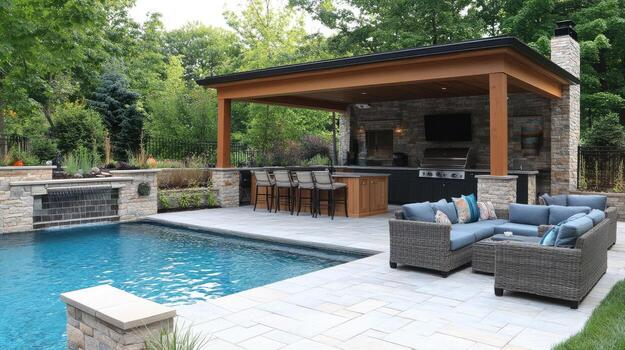
The kitchens that get used year-round are the ones designed as complete outdoor living spaces, not just a grill on a slab. Shade is the difference-maker in a Georgia July: a pergola filters light over a dining area, while a fully roofed pavilion keeps the cook dry through a pop-up thunderstorm; we also build standalone shade structures where a full roof is not practical. For cooler evenings from October through April, a fire pit or a masonry outdoor fireplace extends the season, and layered task and ambient lighting keeps the space usable long after sunset.
Budgeting for Quality, Financing the Vision
Premium materials cost more up front and almost always cost less over ten years, because they are not replaced twice. Where the budget needs room to breathe, we would rather see a client choose granite over a cheaper failing surface and phase in the pizza oven later. Aqualis Pools also offers flexible financing options so the project you build is the one you actually want. Browse our recent outdoor kitchen projects to see how different material combinations look installed, and read what homeowners across Gwinnett County say about working with our team.
Frequently Asked Questions
What is the best countertop material for an outdoor kitchen in Georgia?
Granite is the most reliable all-around choice for our climate: heat-proof, UV-stable, and easy to clean after pollen season. Quartzite is an excellent premium alternative. Avoid engineered quartz outdoors, since its resin binders can yellow in direct sunlight.
Do I need a roof or shade structure over my outdoor kitchen?
It is not required, but shade dramatically extends how often the space gets used and protects appliances and cabinetry from sun and rain. A pergola, pavilion, or shade sail can be matched to your home, and any covered grill area must be properly ventilated, which we design in from the start.
How long does an outdoor kitchen project take to build?
Most of our outdoor kitchen builds run from a few weeks to a couple of months depending on masonry, utilities, and whether the kitchen is part of a larger patio or pool project. You receive a written timeline with your quote before any work begins.
Can you add an outdoor kitchen to an existing patio or pool deck?
Yes, in many cases. We evaluate the slab thickness, drainage, and utility access first, then design around what is already working. Serving Georgia and the communities we serve across the region, we handle everything from standalone grill islands to full outdoor rooms.
Ready to Build an Outdoor Kitchen That Lasts?
You dream it, we build it. Aqualis Pools is a family owned, licensed and insured builder with more than 20 years of experience creating outdoor kitchens and complete backyard retreats across the Georgia area. Call us today at +1 (770) 373-8405 or tell us about your project online, and we will turn your material and appliance wish list into a written design and quote, free of charge.