
Beautiful Outdoor Spaces Built to Last
Paver Patio Contractors Across Georgia
A paver patio is a surface made of separate units, set on a prepared base rather than poured as one slab. It goes down as pieces, which means it can come up as pieces, and everything that makes pavers worth choosing comes back to that one fact.
Aqualis Pools also takes on projects across Florida, Georgia, and South Carolina.
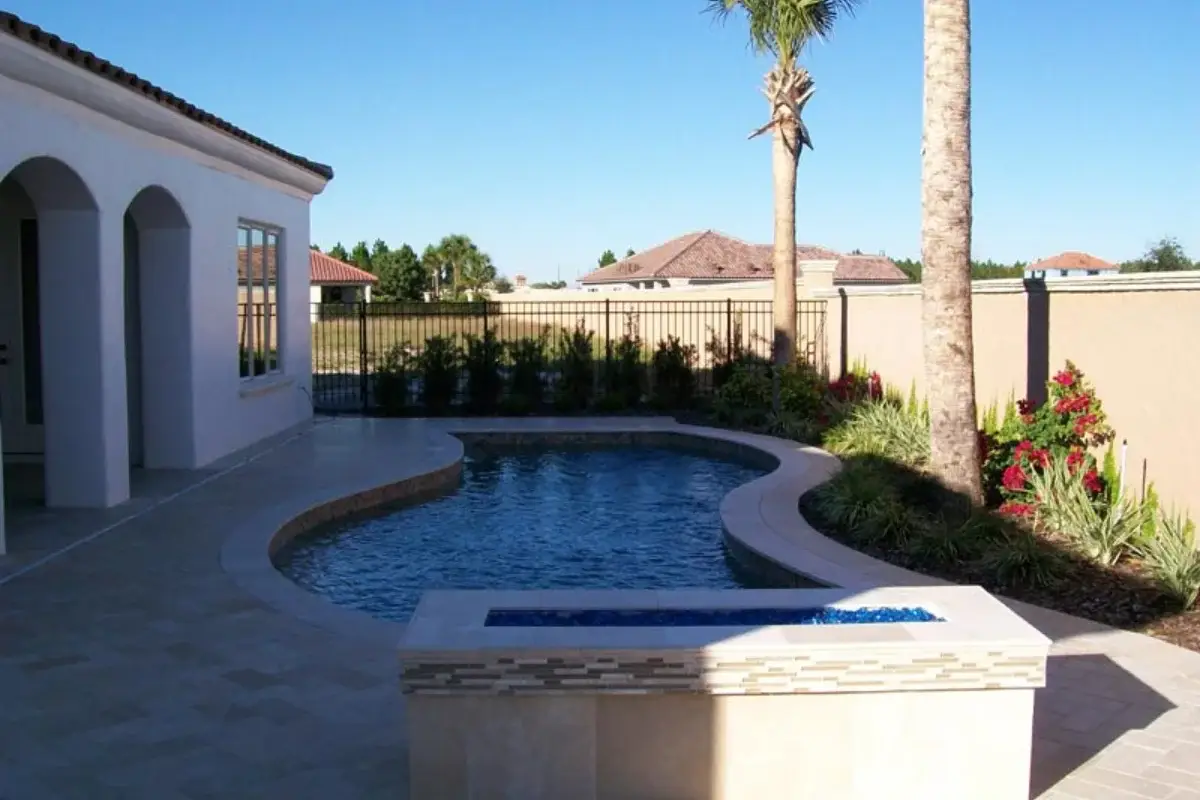
Designed for Comfort and Built for Durability
Pavers or Poured Concrete, Honestly

Poured concrete is one piece. It is cheaper to lay over a large open area, it gives you a plain uninterrupted surface, and when it cracks, and concrete does crack, the repair is visible for as long as the slab lasts. If the shape is simple, the budget is tight and the look you want is plain, a poured slab is a reasonable answer and we would rather say so than talk you out of it.
Pavers cost more to lay because laying them is the work. What you buy for the difference is a surface that can be taken apart. A section that settles can be lifted, re-bedded and put back with the same pieces. A pipe or a conduit running underneath can be reached without breaking anything. A stain in one paver is one paver. Nothing about that is exciting until the day you need it, and then it is the whole reason.
The other real difference is that a paved surface moves in small increments instead of cracking in one place. Ground shifts, and a slab has to either survive it or crack. A field of separate pieces takes it up across the joints.
What It Does Underfoot, Wet and Hot
Around a pool this is the decision, and a photograph will not tell you either answer.
Heat first. Paving in full sun runs a long way above air temperature. The EPA cites a pilot study in which conventional asphalt reached 152 degrees at midday, and while that is asphalt rather than a paver, it is the right order of magnitude for the difference between the air and a hard surface in the sun. What follows is practical: a darker, denser paver stores and returns more of that heat than a lighter or more porous one, and it is the surface people cross barefoot between the house and the water in August.
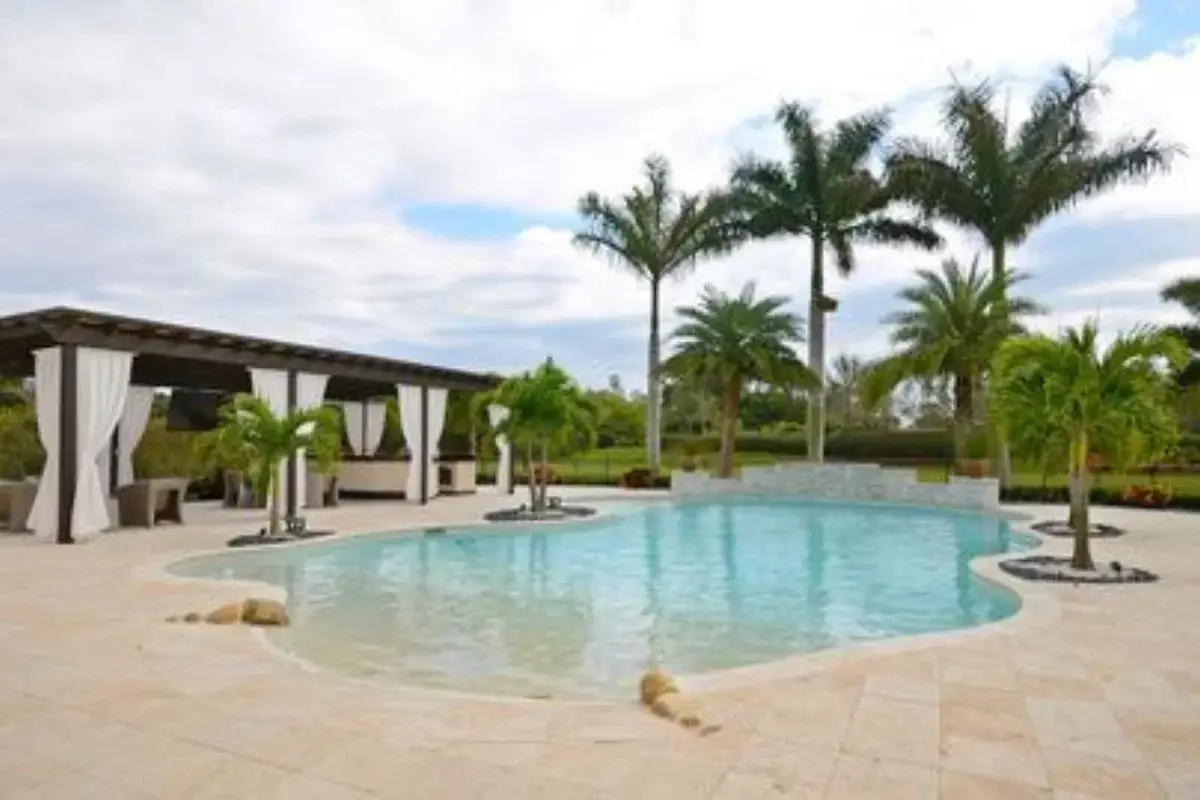
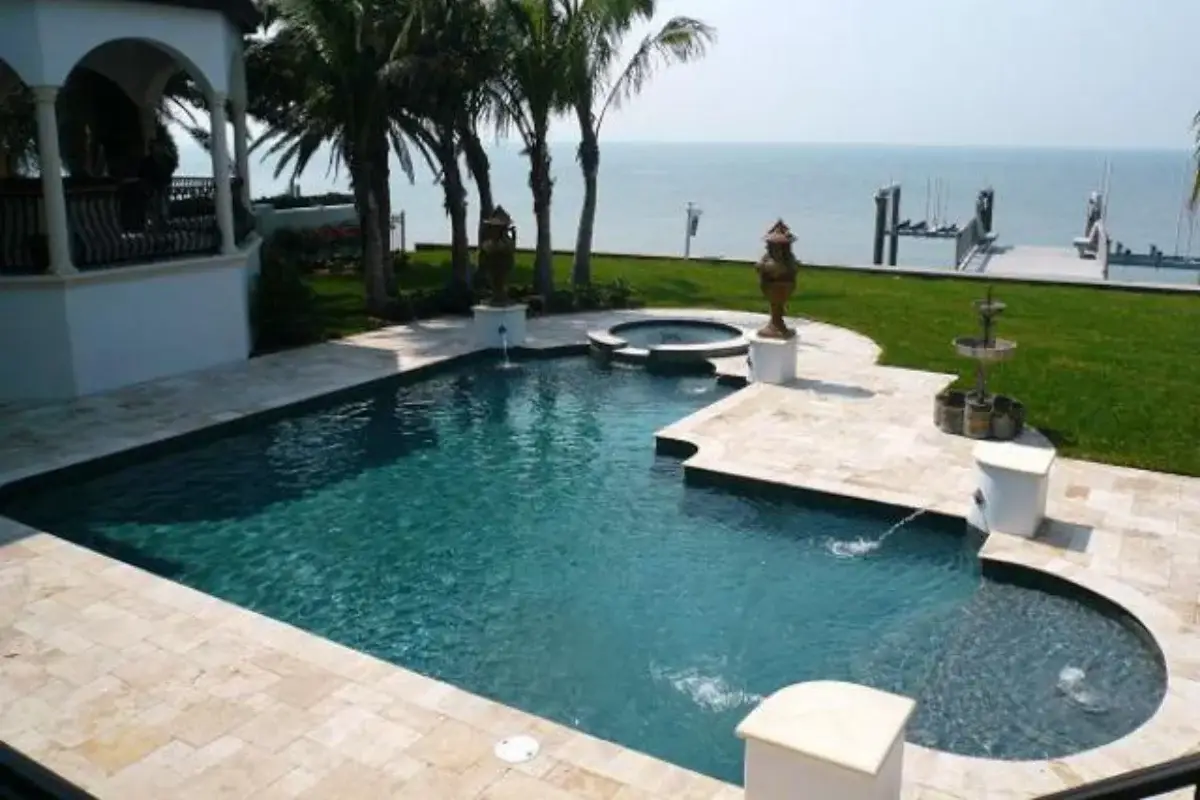
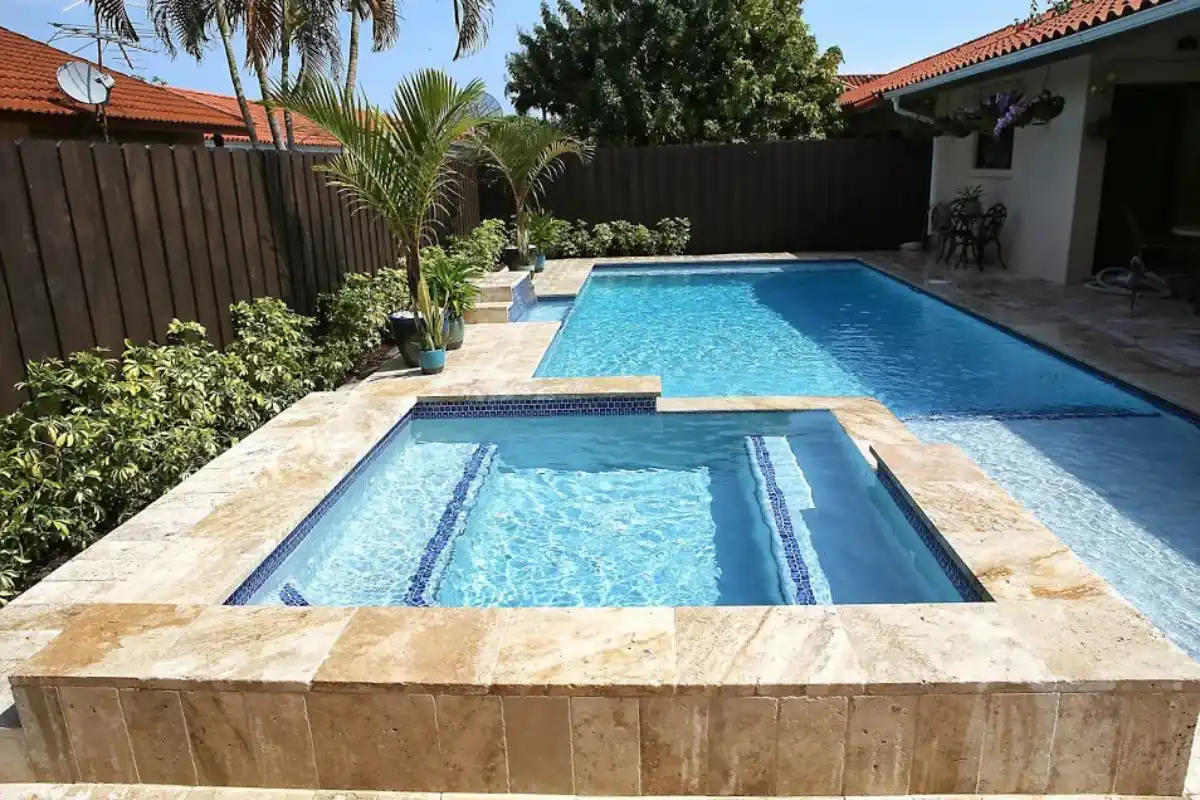
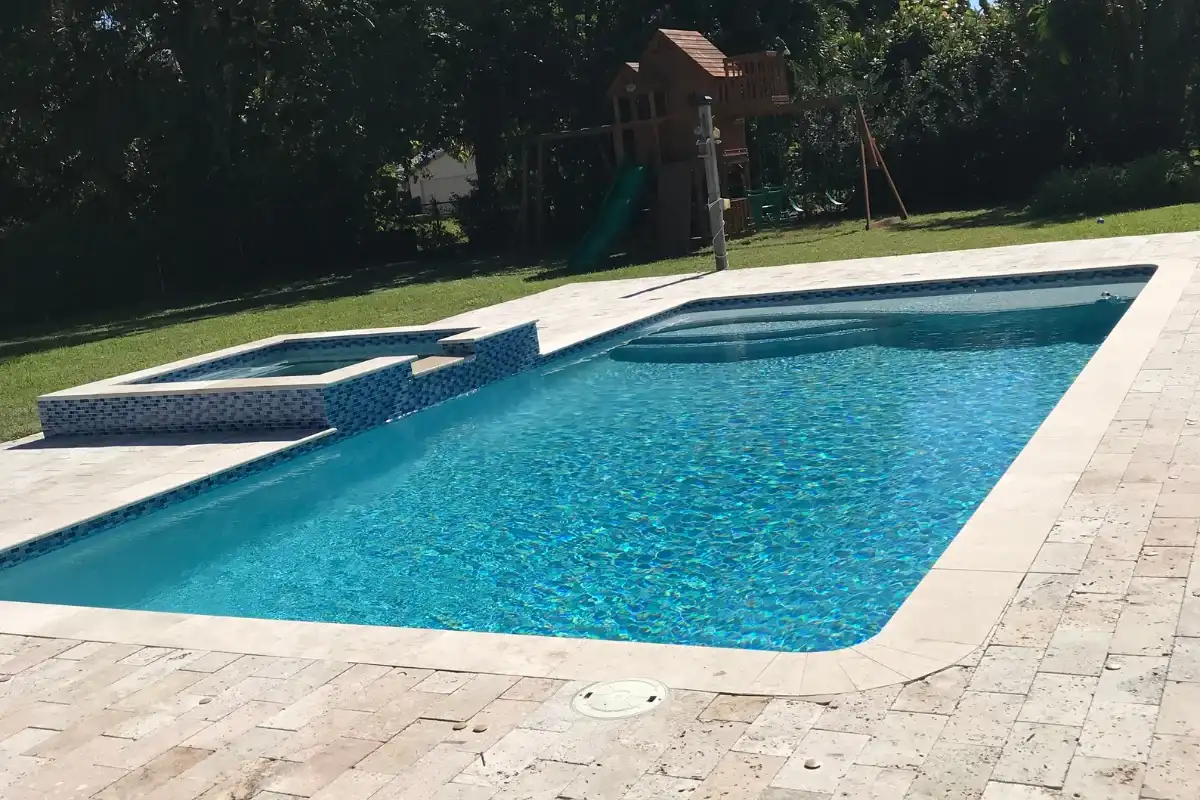
Which is why travertine keeps turning up around pools. It is a light, porous stone that reads cooler underfoot than a dark dense unit, and it is the material a pool builder has an actual reason to recommend. Porcelain is the other modern route, very hard and very consistent in color. Concrete pavers are the value option and come in every color, which cuts both ways, because the darkest color in the brochure is also the hottest one in August. The same conversation applies to the surface immediately around the water, which is pool decking rather than patio, and the two want choosing together.
Then wet. Slip resistance is a property of the finish, not of the material. A textured or shot-blasted face grips; a smooth or heavily tumbled one is a different surface once there is water on it. Sealing changes it again, and a sealer can make a surface slicker unless it is specified with an anti-slip additive. So the honest answer to whether pavers are slip resistant is that some are, that it depends on the face and the sealer, and that the way to decide is to get a wet sample under your foot rather than to read a claim.
Joints, Sand and Edges
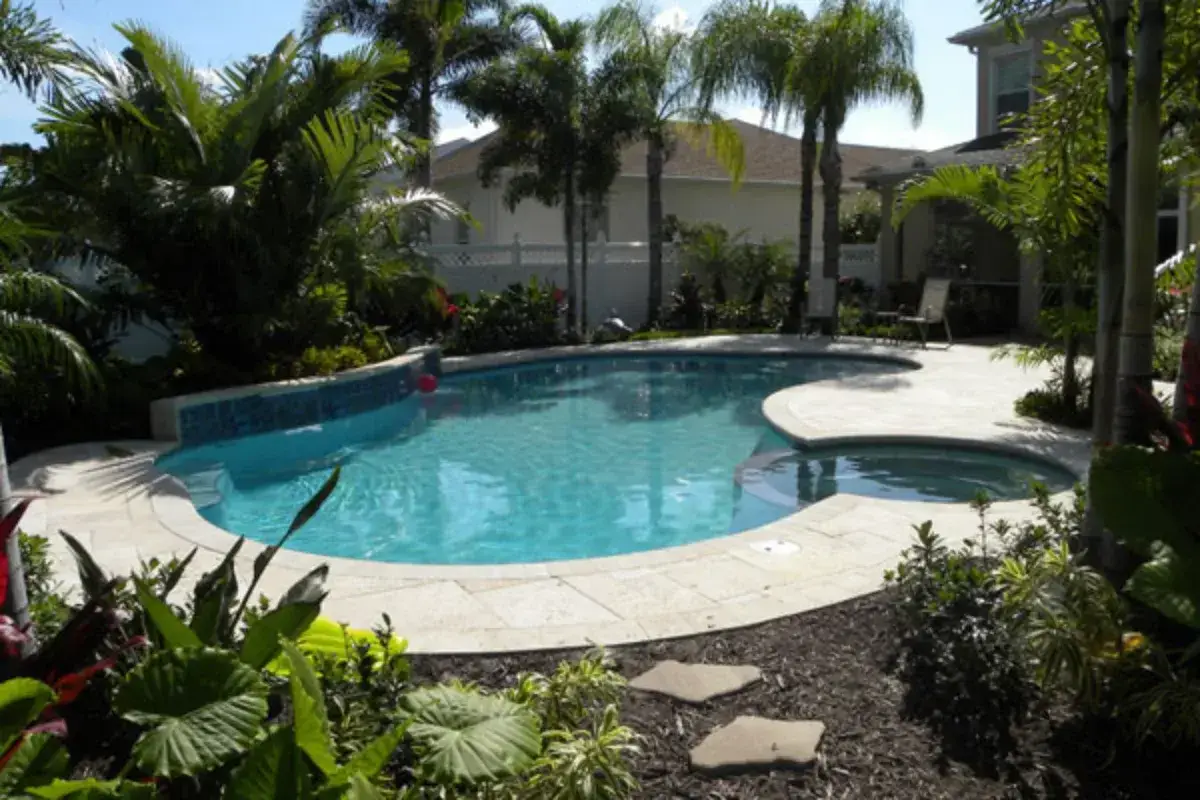
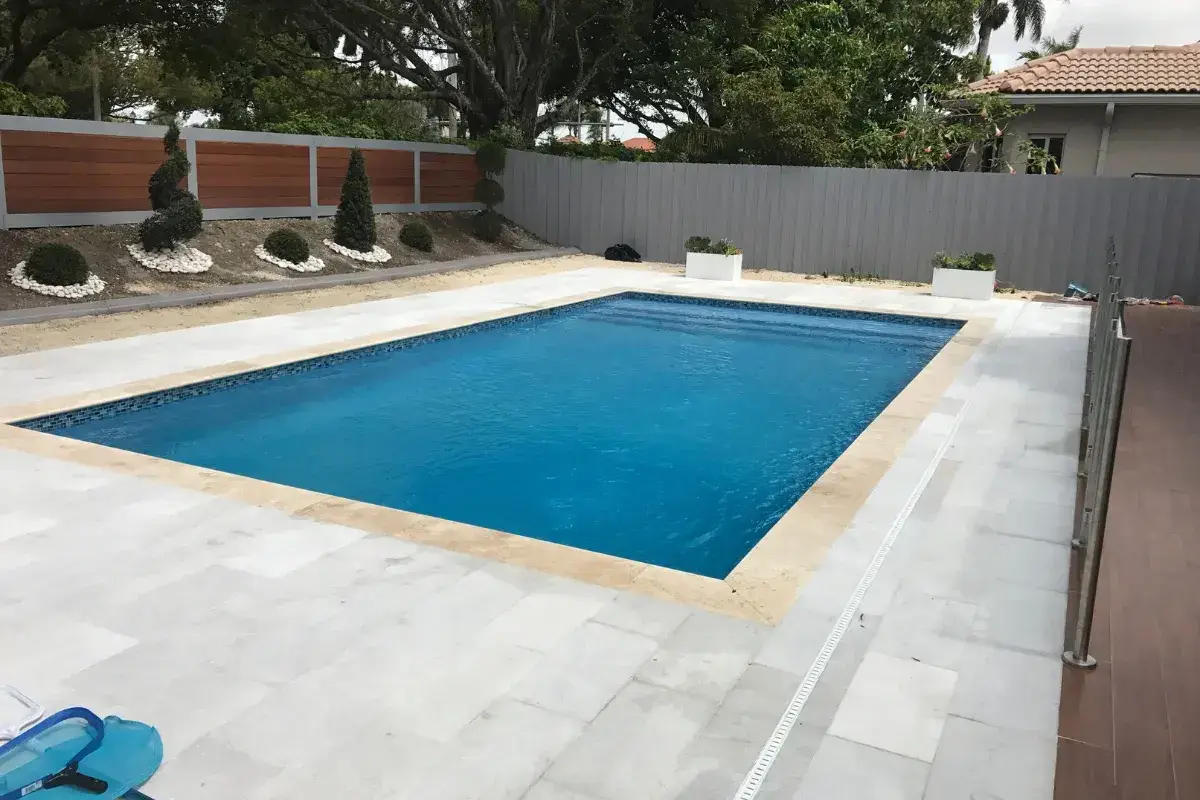
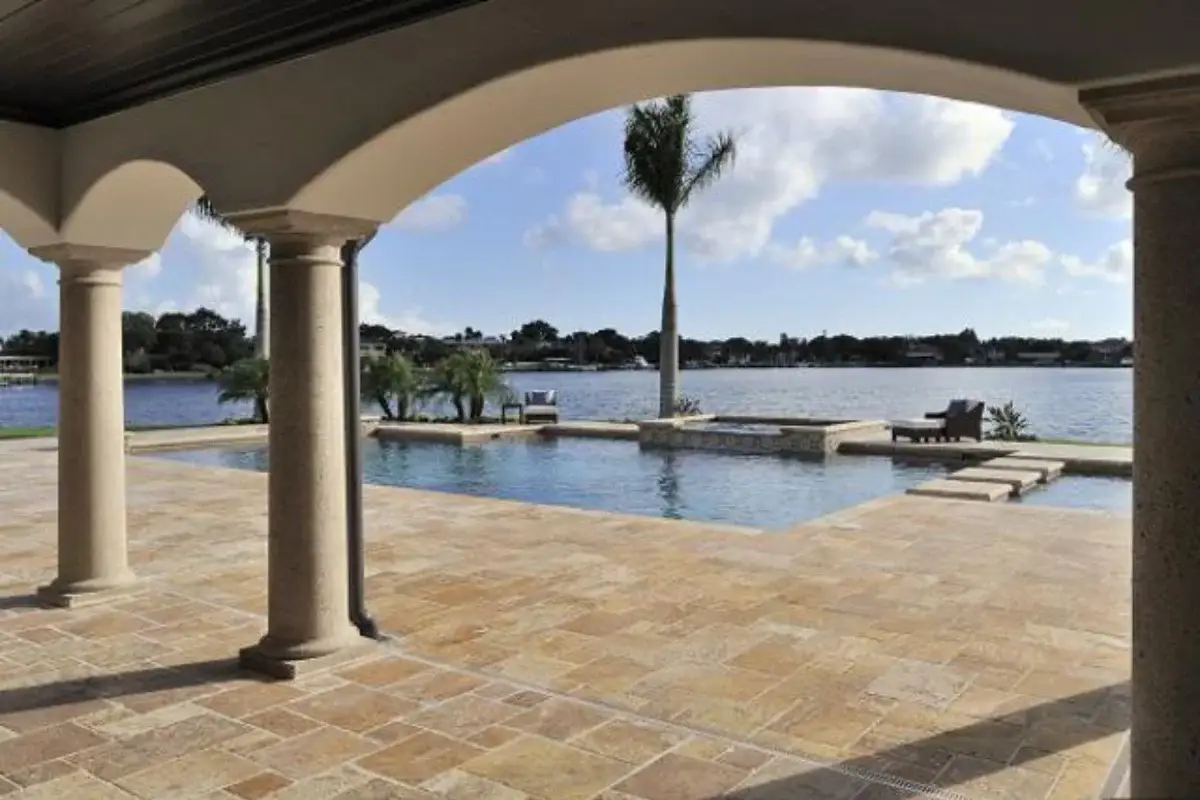
A paver patio fails at the gaps and at the perimeter rather than across the paving, and both are fixable if you know what you are looking at.
The joints hold the field together. What is in them washes out over years, faster where water runs across the surface rather than off it, and empty joints are where weeds and ants get a start. Topping them up is a small job on a schedule and an unpleasant one once movement has begun.
The edges are the other half. A field of separate pieces will spread sideways if nothing stops it, so the perimeter has to be restrained. Edge restraint is buried, it is invisible on handover day, and paving that creeps at the edges is one of the ways a patio starts to look wrong long before it is worn out.
Settlement is the third one, and it is where unit paving earns its keep: a low spot gets lifted, the base gets corrected, and the same pavers go back. On a slab the equivalent conversation involves a saw.
Decisions Made Before Anything Is Laid
Where it goes, and what it connects to. A patio is not a standalone shape. It meets the house, it meets the pool deck or the paving around the water, and it wants a path to the driveway and another to a gate. How those meet is a drawing question. The levels and the falls that tie them together are set out on our hardscaping page, because they apply to every hard surface on the property and not just to this one.
What is going to sit on it. An outdoor kitchen is a concentrated load in one place and it wants the base built for it before the paving goes down, not after. A fire pit puts sustained heat on whatever it sits on, and which paver is under it is a real question rather than a style one.
Anything standing in it. Posts for a pergola need footings that go down past the paving, and cutting them in afterwards means lifting and re-cutting pavers around each one. Set out at the start, the pavers are simply laid around footings that are already there.
Where the ground will not cooperate. A patio needs a level plane, and on a sloping lot that plane is bought either with a retaining wall and fill, or by building up on a frame instead, which is a custom deck and a different trade. Which of those is cheaper depends on how much fall there is, and it is worth pricing both before assuming paving is the answer.
Where the paths go. The route from the driveway to the door and from the door to the pool gets walked every day, in the dark and with wet feet, and it is worth designing rather than inheriting. Walkways and pathways is the same paving in a different shape, and it is the cheapest part of a project to get right at the same time.
What a Paver Patio Costs
Area sets the starting point and the ground sets the rest. A flat site needs preparing; a sloping one needs changing before anything can be laid, and that work is under the surface where nobody will ever admire it.
What else moves the number: the paver itself, where travertine, porcelain, concrete and brick sit at different prices; the pattern, because cuts cost labor and a herringbone against a curved edge costs more than a running bond against a straight one; how many other surfaces the patio has to tie into; whether steps are involved; and whether sealing is included at the end.
Where a patio is part of a larger backyard project, pool financing options apply to it in the same way they apply to the pool.
What Our Clients Say
Aqualis Pools is rated 5.0 on Google, from a small number of reviews, and every one of them can be read on the profile.
Trustindex verifies that the original source of the review is Google.
After talking with several pool companies, Aqualis Pools was the one that made us feel the most comfortable. They listened to our ideas, gave honest feedback, and never tried to push us into things we didn't need. The entire process felt organized and professional. Now that everything is finished, our backyard has become our favorite place to spend time.Posted on Google
 Isabella MillerWhat I appreciated most was how easy the team was to work with. They kept us updated, answered our calls, and followed through on what they promised. There were no surprises along the way, which made the experience much less stressful. The final result turned out beautiful, and we're extremely happy with how everything came together.Posted on Google
 Miranda SuttonAqualis Pools exceeded my expectations from start to finish. Their team is professional, knowledgeable, and committed to delivering high-quality pool construction and renovation services. Communication was excellent throughout the process, and they paid close attention to every detail. The craftsmanship, reliability, and customer service truly set them apart. If you're looking for a trustworthy pool company that delivers beautiful results and a smooth experience, I highly recommend Aqualis Pools. Great work and outstanding service!Posted on Google
 Ethan Carter
A Patio Around a Pool Is Not the Same as a Patio
Two things change when there is water nearby. The surface is walked on barefoot and wet, which moves the finish and the material from a style decision to a comfort and traction decision, as above. And the paving carries whatever comes out of the pool with people: water, and what is dissolved in it.
Which means the fall of the surface matters in a specific direction. Water leaving the patio should not be running into the pool, because what it carries goes in with it. That is one of the reasons the paving around water is set out and priced as its own surface rather than as more patio.
A pool paver patio also tends to be used differently: more chairs, more wet feet, more traffic on one route between the door and the water. It is worth saying out loud at the design stage which strip of it is going to take that traffic.
Paver Patios Across Georgia
We design and build paver patios for homeowners in Lawrenceville, Buford, Loganville, Athens, Auburn and nearby Georgia communities. The full list is on our service areas page, and finished work is in the gallery.
Frequently Asked Questions
Concrete is cheaper over a large simple area and gives you a plain uninterrupted surface. Its weakness is that it is one piece: it cracks eventually, and the repair shows. Pavers cost more because laying them is the work, and what you get for the difference is a surface that comes apart. Settlement can be lifted and re-bedded with the same pieces, anything buried underneath can be reached, and a damaged unit is a single unit. If the shape is simple and the budget is tight, concrete is a fair answer. If you want to be able to fix it later, pavers are.
Some are, and it depends on the face rather than on the fact that they are pavers. A textured or shot-blasted surface grips well when wet; a smooth or heavily tumbled one behaves differently once there is water on it. Sealing changes it again, and some sealers reduce traction unless they are specified with an anti-slip additive. Beside a pool this is worth deciding deliberately: ask for a sample, wet it, and stand on it.
Any hard surface in full sun does. The EPA cites a study in which conventional asphalt reached 152 degrees at midday, which is asphalt rather than paving stone but gives the scale of the gap between air temperature and a surface in the sun. Color and density are the levers: a darker, denser unit holds and returns more heat than a lighter, more porous one, which is why light porous stone like travertine keeps appearing around pools. If the patio is on the barefoot route between the house and the water, treat it as a comfort decision rather than a color preference.
Three things, and all of them are fixable. The sand in the joints washes out over the years, which is a top-up job and, left alone, an invitation to weeds. The perimeter can spread sideways if the edge restraint is inadequate, which is one of the things people mean when they say a patio has failed. And sections can settle where the base was not right or where water has been running through. The advantage of unit paving is that each of those is a lift, a correction and a relay with the same pavers, rather than a demolition.
A properly built paver patio lasts decades, and the honest caveat is that “properly built” is doing the work in that sentence, because the base and the edges decide it and both are buried. Maintenance is modest and real: keep the joints filled, wash it, and reseal on a cycle if it has been sealed. Beside a pool, rinsing off what splashes onto it does more good than anything else. What you should not expect is a surface that needs nothing.
It depends on the area, the pattern, how much cutting the shape needs, and how much the ground has to be changed before anything can be laid.
Start Planning Your Patio
Two answers get this priced. Roughly what area are you covering, and does anyone cross it barefoot on the way to the water? The first sets the number. The second decides the material, and it is the question nobody asks until the surface is already down.
Call (770) 373-8405 with those two answers, or send us a message and we will come back with something specific.